












Best Seller
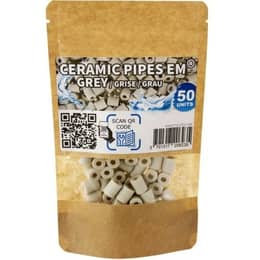
Gray EM ceramic beads & balls | 50 beads
Improve water, protect appliances and soften laundry
$9.21 €8.25
Fast and odor-free, composting worms eat your food scraps and turn them into fertilizer for your plants.

From 2 to 4 trays, with an optional planter.

Up to 18 growing areas around a central worm composter.

Terracotta, with a flower pot.

From 2 to 4 trays, with a lower shelf.

Trays you add over time for easy vermicompost harvesting.

Turn your planters and flower beds into a worm composter: WORMacotta, In-Ground.
 Practical guide

From kitchen to garden, composting becomes simple, fast, and effective for everyone.
 Practical guide
 Practical guide
Live animals (worms and bait) and products to feed and care for pets and livestock.

Eisenia composting worms for your worm composter or compost bin.

Ultra-fresh worms: red worms, Dendros, and Canadian nightcrawlers from 3.5 oz (100 g) to 2.2 lb (1 kg).

Natural solutions dedicated to the well-being of horses, ponies, and donkeys.

Optimize the health and performance of your farm.

Mealworms: natural, nutritious supplements.
Beautify your home with our decorative pieces and care for your house in a natural, sustainable way.
Garden the eco-friendly way, in harmony with nature, for healthy, long-lasting plants.
EM-based products designed to enrich soil, protect plants, support animal health, and make everyday well-being and home care easier.

Contains a blend of 80 families of beneficial microorganisms.

Revitalize, purify, and improve water quality in all your applications.

Stimulate soil microbial activity and plant growth.

Clean and care for your surroundings naturally.

For the well-being and health of pets, livestock, and horses.

Enrich your body care and dietary routines with essential enzymes.
 Practical guidePractical guide

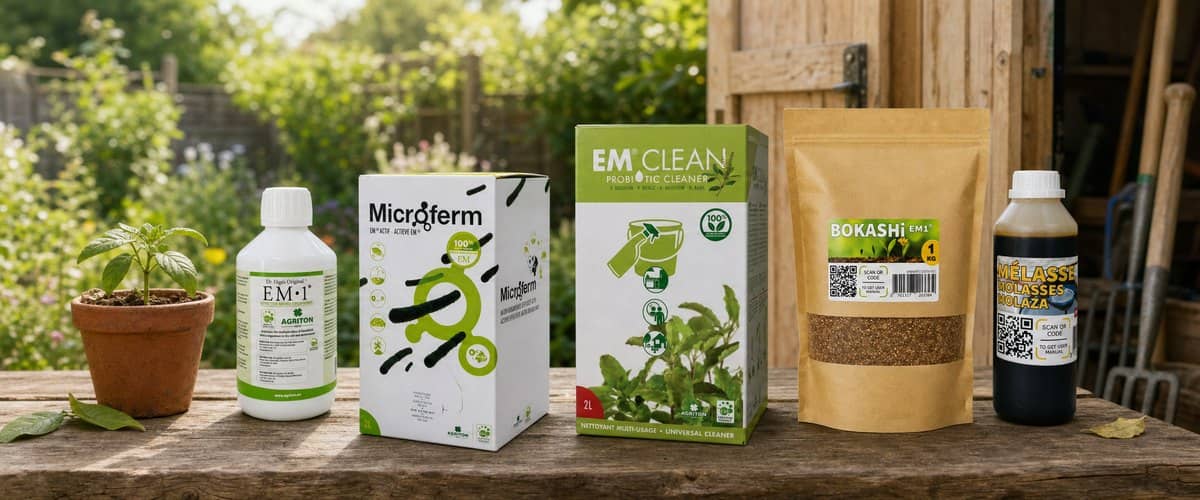
EM-1, EM-A, Microferm, EM Clean, Proferm, Photo+… The effective microorganisms range includes dozens of products, and the names don't always make it clear what each one is for. To avoid buying the wrong bottle, the safest approach is to start with what the label says: the nature of the product, its composition, and its intended use.
Here is our overview, family by family. We describe each product as it is, without attributing effects to it that studies have not confirmed. The exact doses are always given on the label or in the instructions.
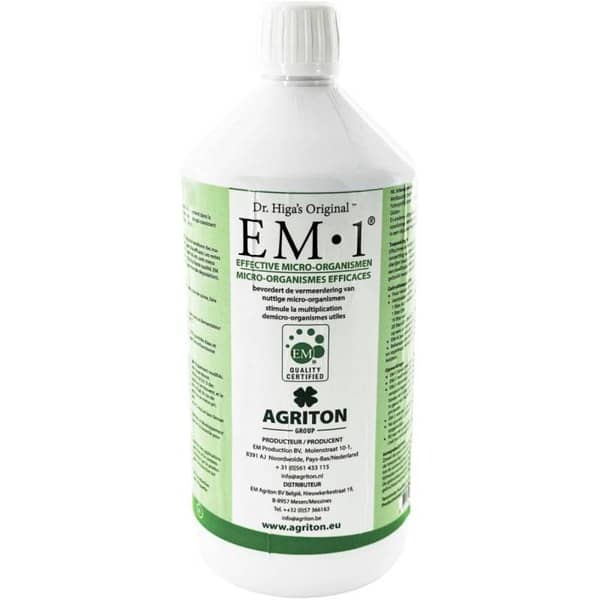
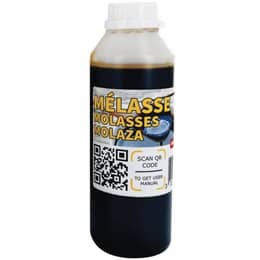
EM-1 mother solution is the starting concentrate for all EM technology. Ours is made in the Netherlands by Agriton, under license from EMRO. It is a brown, highly acidic liquid (pH below 3.5) made from molasses, water, and dormant microorganisms.
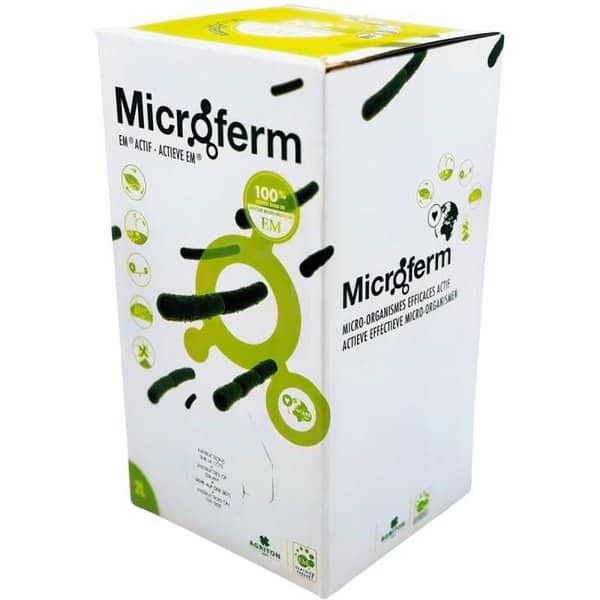
Microferm EM-A is a solution that has already been activated at the factory. Its composition is simple: water, cane molasses, and effective microorganisms. You just dilute it, usually at 1% for watering (about 1.3 fl oz per gallon, or 10 ml per liter of water), then water or spray.
It comes in a Bag-in-Box: a flexible pouch inside a cardboard box that shrinks as it empties. The liquid isn't exposed to air, so it keeps until the expiration date printed on the packaging, roughly one year after production. It's the most practical choice for occasional use in the garden, on the compost pile, in the stable, or in the pond.
The 5.3-gallon (20-liter) size is also available in a jug: our pouring spigot screws on in place of the cap so you can pour without lifting the container, and the key for 20 L jugs makes opening easier.
Emy's tipChoose the size based on what you'll use in a year: a large opened jug forgotten at the back of the garage loses quality, whereas a Bag-in-Box pouch of the right size stays protected from air to the very end.
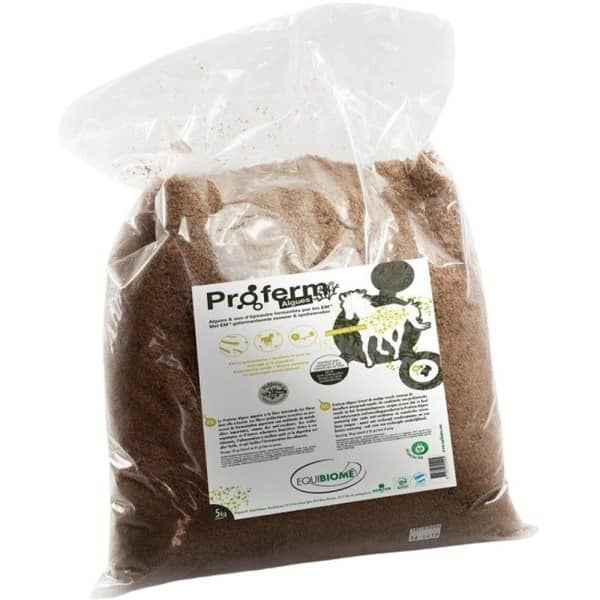
These products are animal feed or barn maintenance products. They don't treat illness: for any symptoms, consult your veterinarian.

Clear water depends first and foremost on nutrient inputs, sunlight, and plants: these products support good pond management, but they don't replace it.
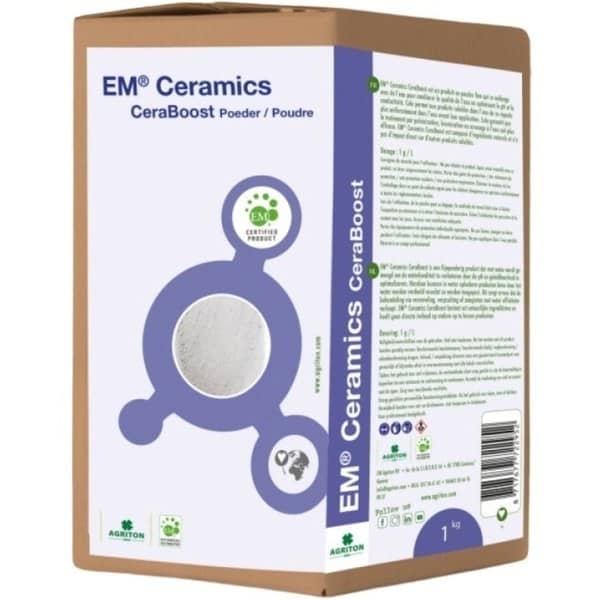
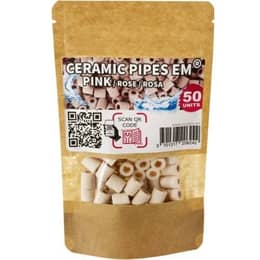
EM ceramics (pearls, beads, ring, Maxi Tube, Cera Boost powder) are made from clay fermented with EM, then fired at high temperature. Firing destroys the microorganisms: these items contain nothing living. The effects the manufacturer claims for them have not been demonstrated, so we present them simply as ceramic items. We explain why in our guide EM ceramics.
The drinks (EM Drink, EM-X Gold), EM Sea Salt Gold, the soap, and the toothpaste fall under food and cosmetics, with their own rules. A garden or cleaning product must never be used in cooking.
Key takeawaysAn EM product is defined first by its nature: solution to activate, ready-to-dilute solution, fermented bran, cleaner, animal feed, or ceramic item. Choose based on the use and the label, not on the promises.
“EM” and “effective microorganisms” have become everyday terms, used by many manufacturers with no connection to the inventor. However, EMRO holds several registered trademarks in Europe, including the EM logo, “EM-1,” “EM Bokashi,” and “EM Effective Microorganisms.” Approved companies may display authorized “manufacturer,” “distributor,” or “retailer” logos.
On the label, check:
Let's be honest: a licensed product guarantees a recipe and quality controls, not a result. Other well-made lactic cultures can ferment effectively. What matters most is a fresh product, properly stored and used according to its instructions.
Did you know?The Bag-in-Box is more than just convenient packaging: as with boxed wine, the pouch empties without letting air in, which preserves the microorganisms down to the last drop.
 Bokashi bucket: our Bokashi EM activator, or the kit to make it.
 Watering the yard and vegetable garden: Microferm, or activated EM-1.
 Compost, grass clippings, manure: Microferm or activated EM-1; Bokashi EM mulch for plantings.
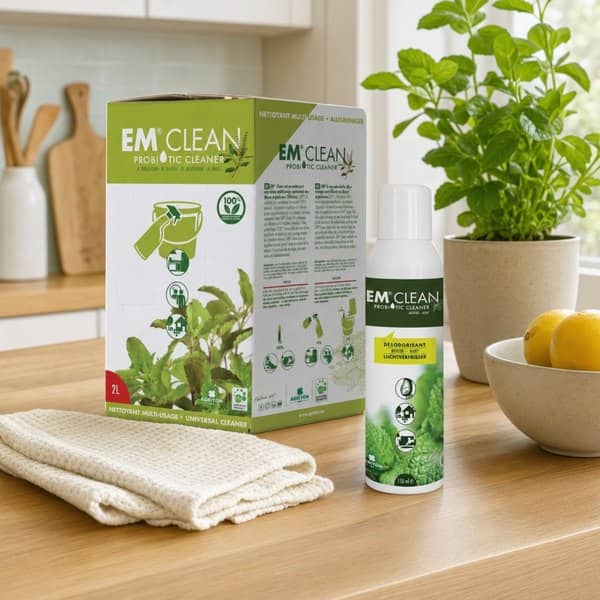
 Household cleaning: EM Clean cleaner; deodorizer for odors.
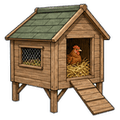 Bedding, stable, chicken coop: diluted Microferm, Vulkamin powder.
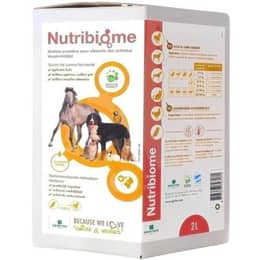
 Feeding horses and other animals: Proferm, Proferm Pets, Syn-vital, depending on the species.
 Silage: EM Silage.
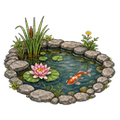 Private pond: Microferm, Photo+ Aquabiome, pond balls.
To get started, two products cover most needs: EM-1, an economical concentrate you activate yourself, and Microferm EM-A, ready to dilute and well protected from air. Around them are specialized products for bokashi, the home, animals, and ponds, to be chosen based on their nature and label. Ceramics, drinks, and cosmetics form a family of their own. A product licensed by EMRO guarantees a recipe and quality controls, and a good result depends above all on a product that is fresh, properly stored, and correctly dosed.
Scan the code or visit mouttafarm.com/guide: all our how-to guides, with links to the products mentioned.



 France
 Belgium
 Switzerland
 Germany
 Austria
 United Kingdom
 Italy
 Spain
 Holland
 Portugal
 Ireland
 Sweden
 Finland
 Denmark
 Greece
 Poland
 Rumania
 Czech Republic
