












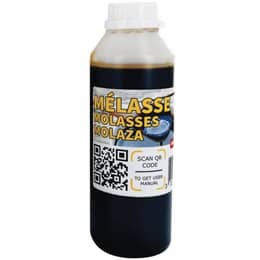
Beet molasses | 250 ml bottle
For animal nutrition or activating EM (A+), from 8.5 fl oz (250 ml) to 2.6 gallons (10 liters)
$4.97 €4.45
Fast and odor-free, composting worms eat your food scraps and turn them into fertilizer for your plants.

From 2 to 4 trays, with an optional planter.

Up to 18 growing areas around a central worm composter.

Terracotta, with a flower pot.

From 2 to 4 trays, with a lower shelf.

Trays you add over time for easy vermicompost harvesting.

Turn your planters and flower beds into a worm composter: WORMacotta, In-Ground.
 Practical guide

From kitchen to garden, composting becomes simple, fast, and effective for everyone.
 Practical guide
 Practical guide
Live animals (worms and bait) and products to feed and care for pets and livestock.

Eisenia composting worms for your worm composter or compost bin.

Ultra-fresh worms: red worms, Dendros, and Canadian nightcrawlers from 3.5 oz (100 g) to 2.2 lb (1 kg).

Natural solutions dedicated to the well-being of horses, ponies, and donkeys.

Optimize the health and performance of your farm.

Mealworms: natural, nutritious supplements.
Beautify your home with our decorative pieces and care for your house in a natural, sustainable way.
Garden the eco-friendly way, in harmony with nature, for healthy, long-lasting plants.
EM-based products designed to enrich soil, protect plants, support animal health, and make everyday well-being and home care easier.

Contains a blend of 80 families of beneficial microorganisms.

Revitalize, purify, and improve water quality in all your applications.

Stimulate soil microbial activity and plant growth.

Clean and care for your surroundings naturally.

For the well-being and health of pets, livestock, and horses.

Enrich your body care and dietary routines with essential enzymes.
 Practical guidePractical guide

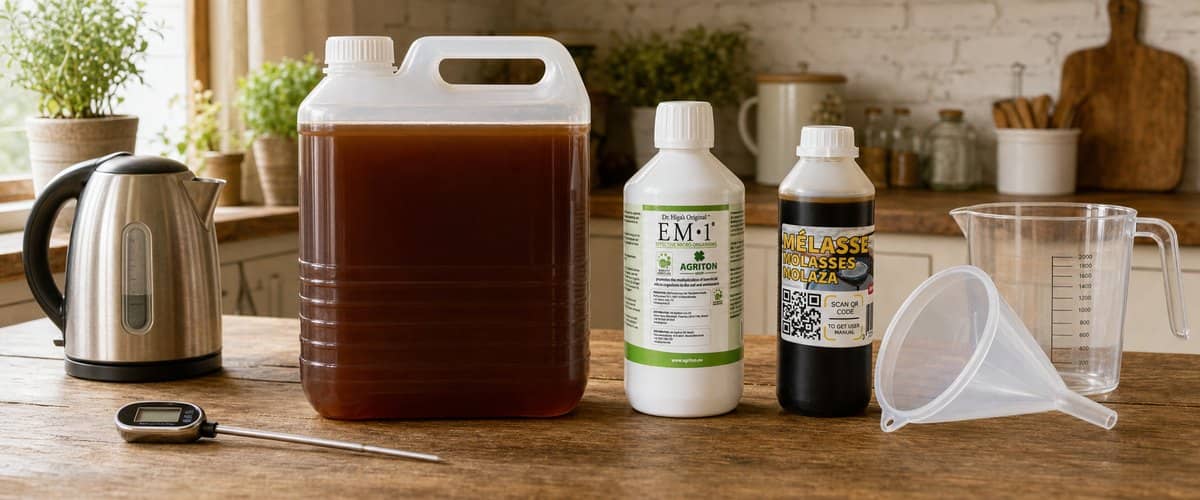
EM-1 is a stock solution: a concentrate of dormant microorganisms, designed to be “woken up” before use. By fermenting it with molasses and water, you get about twenty times its volume in EM-A, the active solution you then dilute for the garden, the compost, or around the house. It's simple and economical, and above all it takes cleanliness, warmth, and a little patience.
Here is the step-by-step method, along with the signs that tell you whether your activation has worked. Instructions sometimes differ, so each time we tell you which figure we go by.
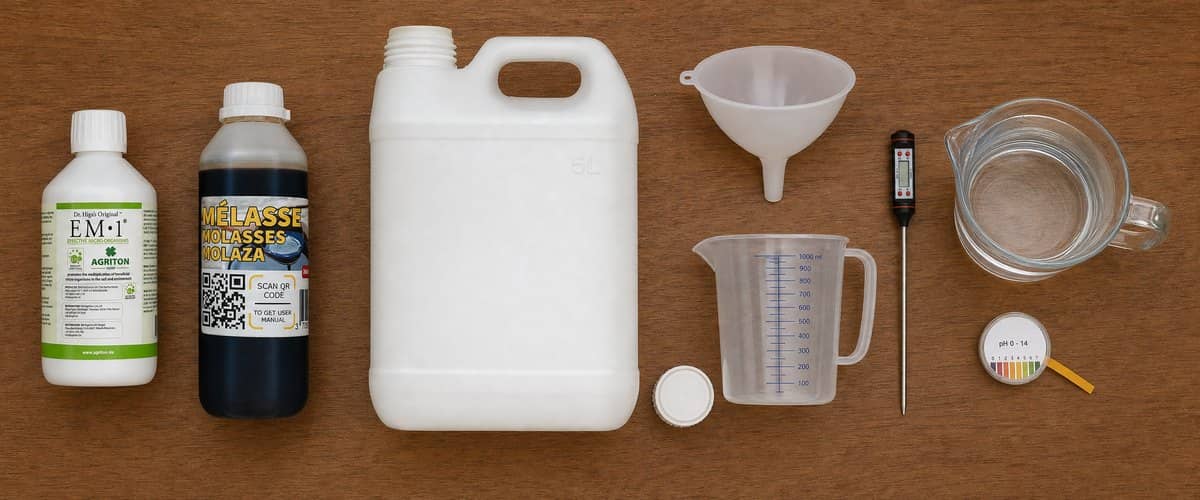
Rinse the container with very hot water, without bleach or disinfectant: the slightest residue can ruin the fermentation.
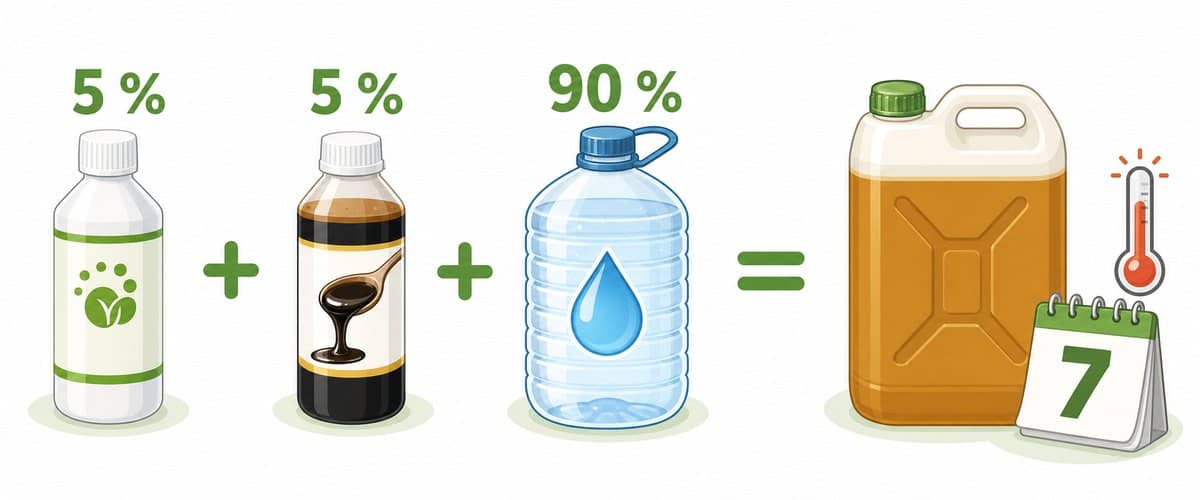
The standard recipe is the same from the manufacturer of our EM-1 and from other licensed producers: 5% EM-1, 5% molasses, and 90% water, or 1 part EM-1, 1 part molasses, and 18 parts water.
Some European producers offer a variation with 3% EM-1 and 3% molasses, fermented at a higher temperature (90–99 °F, or 32–37 °C) in a heated fermenter. It works too, but we recommend sticking with the 5% recipe, which is more forgiving, with or without a heated tank.
Only make as much as you'll use within 1 to 2 months: EM-A doesn't keep indefinitely.
Emy's tipUse a marker to write the preparation date on the container, along with the use-by date two months later. That way, you'll always know at a glance where your EM-A stands.
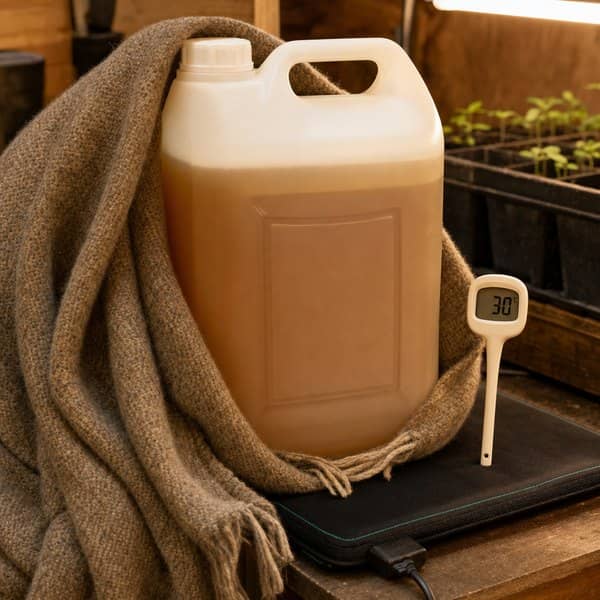
Warmth is the factor that matters most. The manufacturer of our EM-1 recommends a constant temperature of 77–86 °F (25–30 °C) for one week. Other technical data sheets state that below about 63 °F (17 °C), activation takes well over 7 days. Freezing, on the other hand, kills the microorganisms, both during activation and in storage.
Temperature swings are just as much of a problem as cold. So find a warm, stable spot: near a heater (not on it), in a furnace room, on a seedling heat mat, or in a heated room in winter. Wrapping a blanket around the container helps hold in the warmth. A heated activation tank solves the problem: it keeps the mixture at around 86 °F (30 °C), even in winter. Avoid direct sunlight, and don't go above 104 °F (40 °C), which can damage the microorganisms.
Allow 7 days in good conditions, and up to 10 days, or even a little longer, in a cooler room.
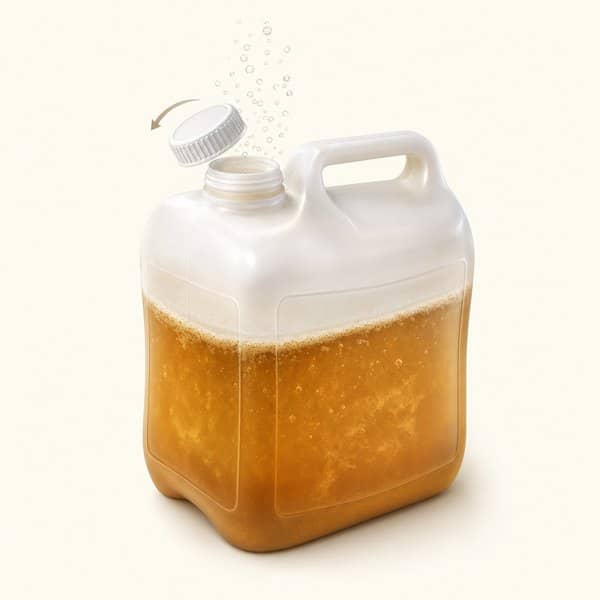
By the second or third day, fermentation produces carbon dioxide: the container swells slightly. That's a sign everything is getting off to a good start.
Don't shake it, don't open it wide, and don't taste it: every bit of air that gets in encourages unwanted microorganisms.
Beyond a few gallons, or if your home is cool in winter, an activation tank makes everything easier. Our EM Activator, made by Agriton just like our EM-1, combines three features:
The recipe stays the same: 5% EM-1, 5% molasses, and 90% non-chlorinated water.
Choose the size based on what you'll use in one to two months: EM-A from a tank keeps no longer than EM-A made in a container.
Fill the tank halfway with hot non-chlorinated water and dissolve the molasses in it. Top it off with cold water to get a lukewarm mixture, then add the EM-1 and stir. Close the tank, fill the airlock halfway with water, and plug in the heater, which must always stay fully submerged. After about 7 days, check the pH as described below. Unplug it, let it cool, then draw off the EM-A into clean containers, filled to the brim and tightly closed. Never run the heater under cold water while it's still hot.
Emy's tipKeep the tank out of the sun, in a room between 59–77 °F (15–25 °C), set on a piece of cardboard and wrapped in a blanket in winter: the heater will use less energy. In summer, a room that's too warm can push the mixture above 104 °F (40 °C). Between batches, rinse the tank with hot water and a little white vinegar or citric acid.
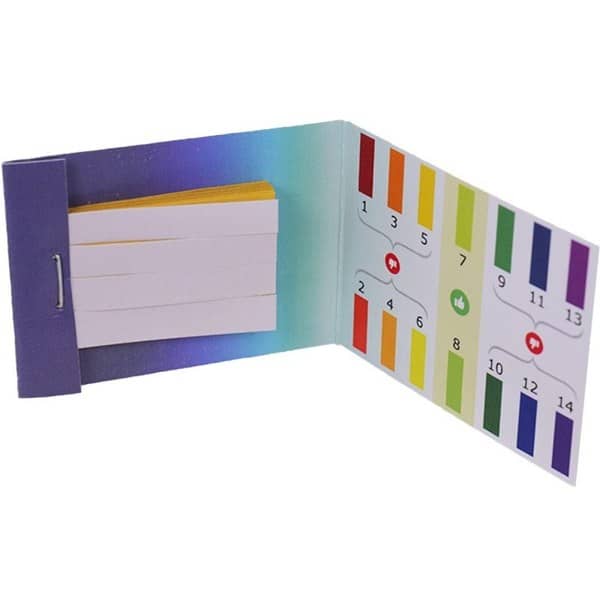
Starting on day 7, check three things:
A light film or whitish flakes on the surface are normal: they're yeasts. A pH slightly below 3.2, with a good smell, isn't a problem. If the pH stays above 4 after 7 days but the smell is good, leave it somewhere warm for a few more days and test again. On the other hand, a rotten or sewage-like smell means the batch has failed: all the signs and fixes are covered in detail in our guide Storing EM and diagnosing a failed EM-A.
Key takeawaysA successful activation means three green lights: a pH of 3.8 or lower, a sweet-and-sour smell, and a color that lightens. When in doubt, the pH has the final say.
EM-A is very acidic: never use it undiluted on living plants. The basic dilution is 1 to 100, which works out to about 2 teaspoons (10 ml) per quart (liter) of non-chlorinated water, or 3.4 fl oz (100 ml) for a 2.6-gallon (10-liter) watering can. Doses for each use (soil, seedlings, compost) are covered in our guides Using EM in the vegetable garden and Speeding up your compost with EM. For other uses, always follow the product label.
Use it within 1 to 2 months of activation. Counts done on an activated solution have shown that lactic acid bacteria drop off sharply within a few weeks: the sooner you use it, the better. Store it somewhere cool, away from light, and tightly closed.
If you'd rather skip activation, EM-A Microferm Active Solution is ready to dilute. Its flexible pouch packaging (Bag-in-Box) protects it from air, giving it a much longer shelf life than homemade EM-A.
One manufacturer's data sheet allows it, but we advise against it: in addition to sugars, molasses provides minerals that benefit the microorganisms. If you run out, buy more molasses rather than improvising: it's the standard ingredient in every set of instructions.
No. The manufacturers are clear: you activate only once, from the stock solution. If you propagate from EM-A, the balance between the microorganisms drifts from one generation to the next, and you no longer know what you're multiplying. Always start over from EM-1.
Yes, some instructions suggest diluting it directly. But activation multiplies the volume by about 20: for regular use, it's far more economical.
Bokashi bran is made directly with EM-1 and molasses, without going through EM-A. Our full recipe is in the guide Making your own homemade bokashi activator.
Did you know?The gas that makes the container swell is mostly carbon dioxide, produced by yeasts, just like in rising bread dough. That's why a container that “bulges” in the first few days is actually a good sign.
To activate EM-1, mix 5% EM-1, 5% molasses, and 90% non-chlorinated water in a clean container filled almost to the brim, then let it ferment for about a week at 77–86 °F (25–30 °C), at a stable temperature, venting the gas without letting air in. The EM-A is ready when its pH is 3.8 or lower, with a sweet-and-sour smell and a color that lightens. Always dilute it, at 1 to 100 for plants, use it within 1 to 2 months, and start over from the stock solution for each new batch. For large volumes or a cool winter, a heated activation tank holds the right temperature and vents itself. To get off to a good start with EM, take another look at our golden rules.
Scan the code or visit mouttafarm.com/guide: all our how-to guides, with links to the products mentioned.



 France
 Belgium
 Switzerland
 Germany
 Austria
 United Kingdom
 Italy
 Spain
 Holland
 Portugal
 Ireland
 Sweden
 Finland
 Denmark
 Greece
 Poland
 Rumania
 Czech Republic
