











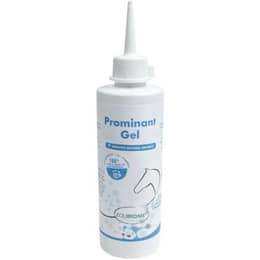
EM Prominant Gel, EM gel for hooves and skin
Care for horse hooves and skin, with EM
$18.51 €16.58
Fast and odor-free, composting worms eat your food scraps and turn them into fertilizer for your plants.

From 2 to 4 trays, with an optional planter.

Up to 18 growing areas around a central worm composter.

Terracotta, with a flower pot.

From 2 to 4 trays, with a lower shelf.

Trays you add over time for easy vermicompost harvesting.

Turn your planters and flower beds into a worm composter: WORMacotta, In-Ground.
 Practical guide

From kitchen to garden, composting becomes simple, fast, and effective for everyone.
 Practical guide
 Practical guide
Live animals (worms and bait) and products to feed and care for pets and livestock.

Eisenia composting worms for your worm composter or compost bin.

Ultra-fresh worms: red worms, Dendros, and Canadian nightcrawlers from 3.5 oz (100 g) to 2.2 lb (1 kg).

Natural solutions dedicated to the well-being of horses, ponies, and donkeys.

Optimize the health and performance of your farm.

Mealworms: natural, nutritious supplements.
Beautify your home with our decorative pieces and care for your house in a natural, sustainable way.
Garden the eco-friendly way, in harmony with nature, for healthy, long-lasting plants.
EM-based products designed to enrich soil, protect plants, support animal health, and make everyday well-being and home care easier.

Contains a blend of 80 families of beneficial microorganisms.

Revitalize, purify, and improve water quality in all your applications.

Stimulate soil microbial activity and plant growth.

Clean and care for your surroundings naturally.

For the well-being and health of pets, livestock, and horses.

Enrich your body care and dietary routines with essential enzymes.
 Practical guidePractical guide

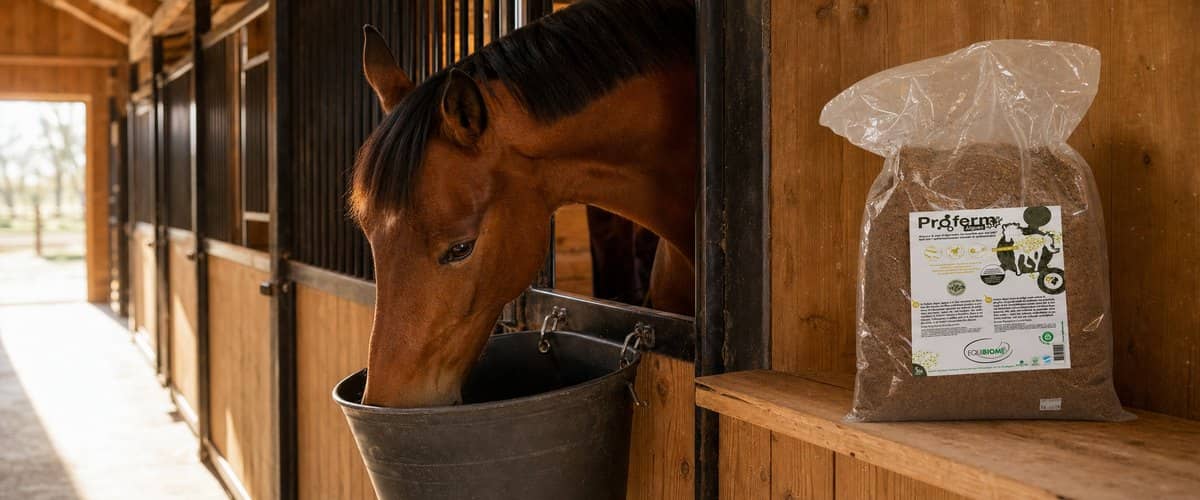
Proferm, Syn-Vital, Aronia+: behind these names are complementary feeds made by fermentation with effective microorganisms (EM). They are designed for horse owners and livestock farmers looking for simple products made from plant-based raw materials. Prominant Gel, on the other hand, is an external care product for hooves and skin.
This guide describes what these products contain according to their labels, how to dose and introduce them, and, above all, what you can reasonably expect from them. A complementary feed provides nutrition. It does not treat anything, and the law forbids presenting it as anything else.
A complementary feed is added to the basic ration (hay, grass, and grain) without replacing it. The feeds in the EM range start with cereal bran, the outer layer of the grain, which is fermented with EM in the absence of air. Lactic acid fermentation acidifies the bran, gives it a sweet-and-sour smell, and produces organic acids. According to the manufacturer, it also makes the ration more palatable.
The principle is similar to that of the bran used to make bokashi, but the two products are in no way interchangeable. Animal feed is subject to its own rules for manufacturing, traceability, and labeling.
Emy's tipStore your bokashi activator well away from the tack room and the feed bin. It is made to ferment food scraps, not to feed animals. Never feed it to an animal, not even in small amounts.
Proferm EM is made of 100% spelt bran fermented with EM. It is intended for horses, ponies, and donkeys. The manufacturer explains that it chose spelt, an ancient grain, in collaboration with an equine veterinarian.
There is also a Proferm Seaweed version, which adds the brown seaweed Ascophyllum nodosum to the same bran. This seaweed provides minerals and trace minerals, including iodine. Iodine is essential, but too much is as harmful as too little. In particular, it can cause goiter, and foals born to mares given too much iodine are the most vulnerable. Most horse feeds and mineral supplements already contain iodine. If your horse gets a mineral supplement or another seaweed-based product, or if your mare is pregnant, check with your vet so you don't double up on iodine.
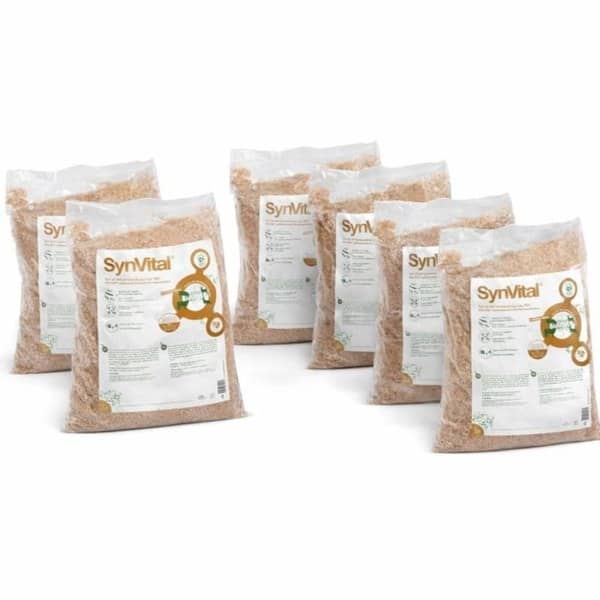
Syn-vital EM uses the same process, but with wheat bran. The manufacturer intends it for sheep, goats, cattle, dairy cows, calves, and deer, and recommends Proferm for horses instead. For dogs, cats, rabbits, and poultry, there is a dedicated version, presented in our guide EM for dogs, cats, and small animals.
The doses below are the ones given by the manufacturer. They may change from one batch or label version to the next, so the label on the bag always has the final word.
 Proferm and Proferm Seaweed: about 1.8 oz (50 g) per day for a 1,100 lb (500 kg) horse, or one large handful; 0.9 oz (25 g) for a pony or donkey. Some distributors' instructions give lower doses: 0.7–1.1 oz (20–30 g) for a horse and 0.35 oz (10 g) for a pony. At 1.8 oz (50 g) per day, an 11 lb (5 kg) bag lasts about 100 days.
 Syn-Vital: 0.35 oz (10 g) per day for a sheep or goat, 0.18 oz (5 g) for a calf, 1.8–2.5 oz (50–70 g) for a lactating cow, and 0.7–1.8 oz (20–50 g) for a dry cow.
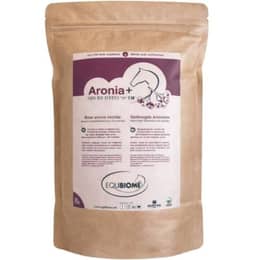
 Aronia+: one 1.8 oz (50 g) dose per day for a horse, half a dose for a pony or donkey, as a one-month course.
Mix the dose into the usual ration. With horses, any change in diet should be made gradually: start with a small fraction of the dose and increase it over one to two weeks, keeping an eye on appetite and manure.
Keep the bags tightly closed in a cool, dry place. A sweet-and-sour smell is normal, but never feed a product that is moldy, damp, or smells rotten.
Did you know?Fermented feed often has a surprising smell: slightly sour, a bit like mild sauerkraut. Many horses take to it right away, while others sort it out of their feed at first. Mixing it into a damp feed or with a few of their usual pellets helps win over the pickier ones.
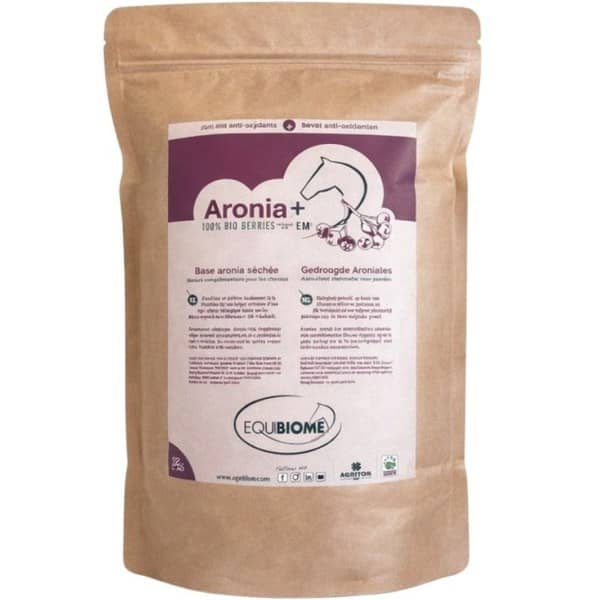
Aronia+ EM is made of dried aronia berries, organically grown near the French-Belgian border and enriched with EM bokashi. Aronia is a small black fruit that is naturally rich in pigments from the polyphenol family (anthocyanins), as well as vitamins and minerals. The manufacturer designed it as a one-month course, for example when the seasons change or for senior horses, and a measuring scoop is included. It can be fed mixed into the ration or on its own.
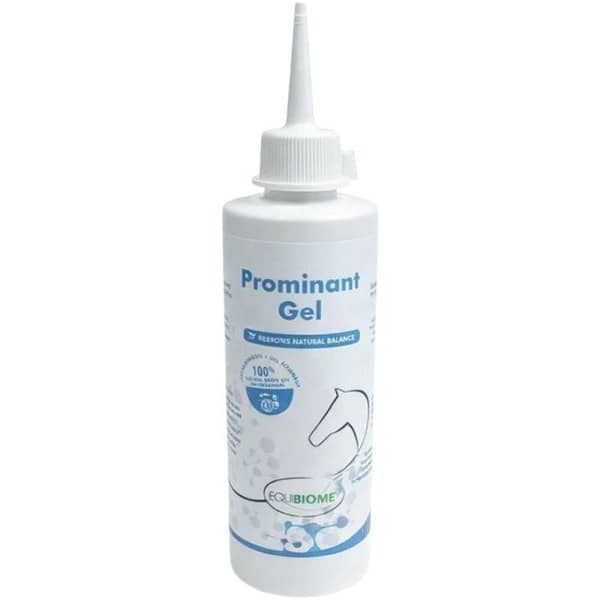
EM Prominant Gel is not a feed. It is a gel for external use. Its ingredients are simple: water, cane molasses, and EM microorganisms (lactic acid bacteria and yeasts). Its thick texture and applicator tip let you apply it deep into the grooves of the frog on a hoof that has been picked out, cleaned, and dried, or on the skin. The manufacturer recommends it for regular care, especially in wet weather, when hooves stay damp.
It is not a veterinary drug. A frog that smells strong, oozes, or is becoming deeply eroded, scabs on the pasterns, or a lame horse all call for the farrier and the vet.
In Europe, animal feed labeling is governed by Regulation (EC) No 767/2009. A feed may describe its ingredients and nutritional characteristics. It may not claim to prevent, treat, or cure a disease. A product presented that way becomes a veterinary drug, with all the authorizations that entails. Any claim must also be objective and backed by scientific evidence.
That is why we will not promise any effect on your animal's health, even though you can find those kinds of promises online. We explain this framework in detail in our guide EM and regulations.
We have not found any published independent study on Proferm, Syn-Vital, or Aronia+ themselves. The manufacturer cites a laboratory analysis indicating that its fermented spelt bran contains 1.8 times more polyphenols, but that analysis has not been published.
On the principle of EM-fermented bran, a trial carried out in Ethiopia on dairy cows replaced all or part of the concentrate with EM-fermented wheat bran. Milk yield rose from about 10.5 to 11 quarts (9.9 to 10.4 liters) per day. However, there were only five cows per group and no group receiving unfermented bran, so there is no way to tell how much of the result was due to fermentation. More broadly, fermented feeds are the subject of a great deal of livestock research, with results that vary by species and product.
Key takeawaysAn EM-fermented feed is a palatable, plant-based addition to the ration. Judge it by what you observe in your animal (appetite, condition, and manure), together with your vet, and not by health promises.
No supplement should ever delay a visit from the vet. Call your vet right away if your animal shows signs of colic (pawing the ground, looking at its flank, rolling), diarrhea, loss of appetite or condition, fever, or lameness.
 Tell your vet about every supplement you give, especially if the animal is being treated for something.
 Ask your vet's advice before giving any to a pregnant or nursing mare, a foal, or an animal on a closely monitored diet.
 If your horse competes, have the ingredients of any supplement checked against the drug and medication rules of your discipline.
Around the barn, EM are also used to maintain bedding. See our guide EM in the horse barn, cattle barn, and chicken coop. Our full equine range is gathered in our EM for horses section.
Proferm (spelt bran, for equines), Proferm Seaweed (with Ascophyllum seaweed), Syn-Vital (wheat bran, for ruminants), and Aronia+ (aronia berries and EM bokashi) are fermented complementary feeds. They are dosed according to the label, around 1.8 oz (50 g) per day for a horse, and introduced gradually. Prominant Gel is an external care product for the frog and the skin. None of these products is a drug: no independent study has evaluated their effects, and the law prohibits them from making any health claims. They complement a good ration and good veterinary care, but never replace them.
Scan the code or visit mouttafarm.com/guide: all our how-to guides, with links to the products mentioned.



 France
 Belgium
 Switzerland
 Germany
 Austria
 United Kingdom
 Italy
 Spain
 Holland
 Portugal
 Ireland
 Sweden
 Finland
 Denmark
 Greece
 Poland
 Rumania
 Czech Republic
