











Best Seller
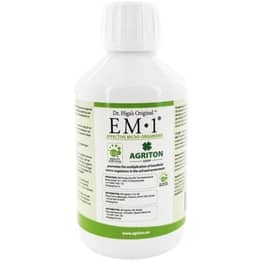
EM-1 mother solution of effective microorganisms | 250 ml bottle
250 ml, 1 and 10 liter bottles
$12.68 €11.36
Fast and odor-free, composting worms eat your food scraps and turn them into fertilizer for your plants.

From 2 to 4 trays, with an optional planter.

Up to 18 growing areas around a central worm composter.

Terracotta, with a flower pot.

From 2 to 4 trays, with a lower shelf.

Trays you add over time for easy vermicompost harvesting.

Turn your planters and flower beds into a worm composter: WORMacotta, In-Ground.
 Practical guide

From kitchen to garden, composting becomes simple, fast, and effective for everyone.
 Practical guide
 Practical guide
Live animals (worms and bait) and products to feed and care for pets and livestock.

Eisenia composting worms for your worm composter or compost bin.

Ultra-fresh worms: red worms, Dendros, and Canadian nightcrawlers from 3.5 oz (100 g) to 2.2 lb (1 kg).

Natural solutions dedicated to the well-being of horses, ponies, and donkeys.

Optimize the health and performance of your farm.

Mealworms: natural, nutritious supplements.
Beautify your home with our decorative pieces and care for your house in a natural, sustainable way.
Garden the eco-friendly way, in harmony with nature, for healthy, long-lasting plants.
EM-based products designed to enrich soil, protect plants, support animal health, and make everyday well-being and home care easier.

Contains a blend of 80 families of beneficial microorganisms.

Revitalize, purify, and improve water quality in all your applications.

Stimulate soil microbial activity and plant growth.

Clean and care for your surroundings naturally.

For the well-being and health of pets, livestock, and horses.

Enrich your body care and dietary routines with essential enzymes.
 Practical guidePractical guide

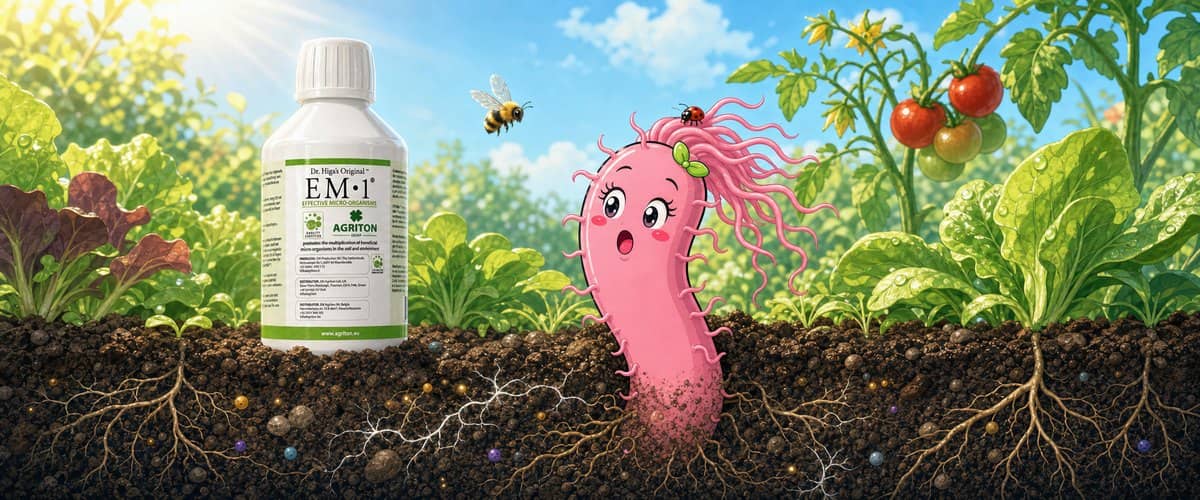
"Effective Microorganisms," "EM," "EM-1": these terms come up as soon as you take an interest in bokashi, natural gardening, or cleaning without harsh products. But what does a bottle of EM really contain? Where does the idea come from, and what can you expect from it?
This guide covers the basics: the definition, the history, and the composition as stated on the labels and as measured by independent analyses. We sell these products, and that is exactly why we want to separate what is established from what the manufacturer claims.
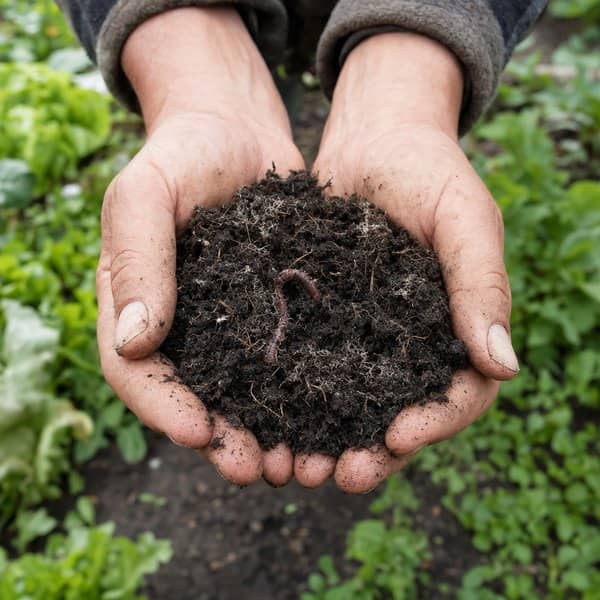
Microorganisms are living things invisible to the naked eye: bacteria, yeasts, and molds. They are everywhere: on our hands, on peels, in the air, and above all in the soil, where a single gram can hold hundreds of millions to billions of bacteria.
We have been using them for thousands of years, often without realizing it. Lactic acid bacteria make yogurt, sauerkraut, and silage. Yeasts make bread rise and ferment wine and beer. EM are based on these same families, which are well known in food production.
Effective Microorganisms, or EM, are mixed cultures: several species are grown and then blended in a sugary, molasses-based liquid. The product is very acidic, with a pH of around 3 to 4, comparable to diluted vinegar or sauerkraut juice.
The original idea is simple: rather than searching for THE right bacterium, combine compatible microorganisms that feed off one another. Lactic acid bacteria and yeasts, for example, coexist naturally in many fermented foods, such as sourdough or kefir.
EM are almost never used undiluted. They are diluted in water, multiplied with molasses, or fixed onto a dry carrier such as wheat bran, which is how bokashi activator works.
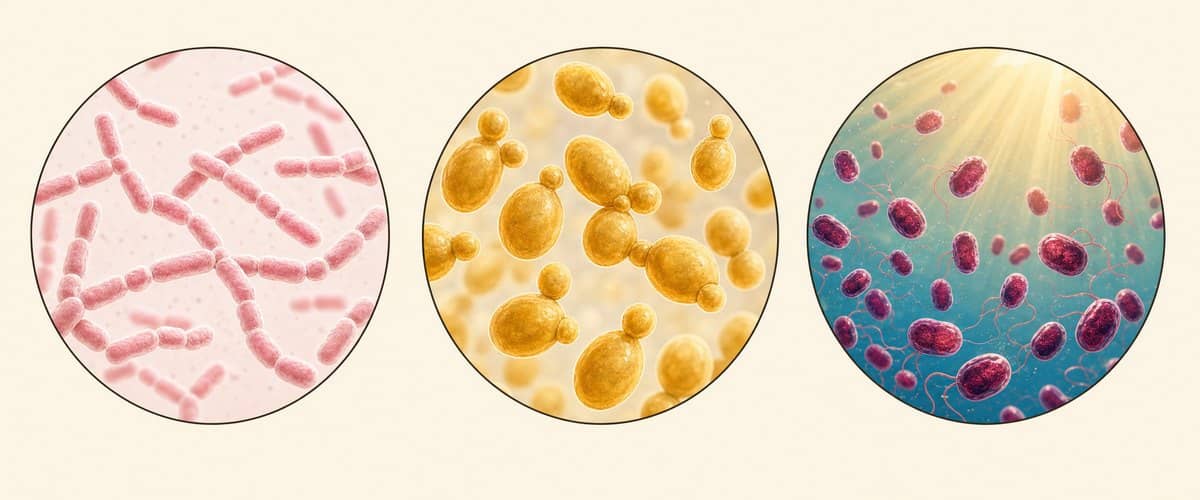
Manufacturers list three main families, and some add two more:
Comparing technical data sheets from several countries reveals significant differences. The American data sheet for EM-1 declares just one species, a lactic acid bacterium (Lactobacillus casei), at one million units per milliliter. Other producers declare lactic acid bacteria, yeasts, and photosynthetic bacteria. The brochure from our Dutch supplier, Agriton, lists five families. One approved European distributor even acknowledges that the original blend has been simplified over the years so that it can be produced consistently in all climates.
The often-repeated figure of "80 species," drawn from around 2,000 microorganisms tested, comes from the manufacturer. It is not confirmed by any published analysis and does not appear on any of the labels we have examined.
Laboratories that have analyzed EM solutions reach a consistent conclusion: lactic acid bacteria and yeasts are by far dominant. In a DNA analysis published in 2024, lactobacilli accounted for more than 99% of the bacteria detected in the solution, a single yeast for around 93% of the fungi, and no photosynthetic bacteria were identified. Public horticultural trials carried out over several years in Germany came to the same conclusion: working with EM essentially means working with lactic acid bacteria.
Key takeawaysIn practice, EM is mainly a highly acidic culture of lactic acid bacteria and yeasts in molasses. This explains why it is so effective at fermenting and preserving organic matter, and it is also what sets its limits.
Emy's tipTurn your bottle over and read the composition and expiration date printed on the label: the label, not a brochure, is what counts for the product you have in your hands.
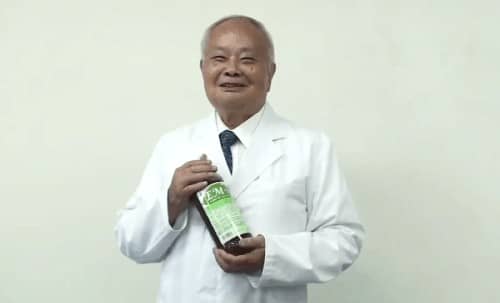
EM were born in Japan, on the island of Okinawa, in the early 1980s. Their inventor, Professor Teruo Higa, taught horticulture. He was looking for ways to get good harvests with fewer chemicals and was testing cultures of microorganisms isolated one by one.
According to his own account, the discovery owed a great deal to chance: it was a mixture, rather than an isolated strain, that reportedly gave the most encouraging results. The first commercial product, EM-1, appeared in the mid-1980s. In 1993, Higa published An Earth Saving Revolution, a book that made EM known far beyond Japan.
In a paper co-authored in 1994 with a soil microbiologist, Higa himself acknowledged that the link between soil microbial life and crop yields remained poorly understood, and that the main problem with these cultures was a lack of reproducible results. This early honesty is worth remembering.
In 1994, according to the manufacturer, Higa founded EMRO (EM Research Organization), which holds the trademarks and the recipe for EM-1. EMRO grants licenses to local producers: EM-1 is now manufactured in around fifty countries, and EM products are distributed, according to the manufacturer, in more than a hundred countries.
In Europe, EM have been available since 1995. The EM products we sell are made in the Netherlands by Agriton, an EMRO licensee. Other European companies offer comparable cultures under their own brands. The term "Effective Microorganisms" is used by many manufacturers, while EMRO has registered several trademarks, such as "EM-1" and the EM logo. We explain how to sort it all out in our guide choosing the right EM product.
Did you know?Lactic acid bacteria were renamed in 2020: the classification was revised and the former genus Lactobacillus, which had become too diverse, was split into 25 genera. Lactobacillus casei is now called Lacticaseibacillus casei, and L. plantarum has become Lactiplantibacillus plantarum. Labels often still use the old names.
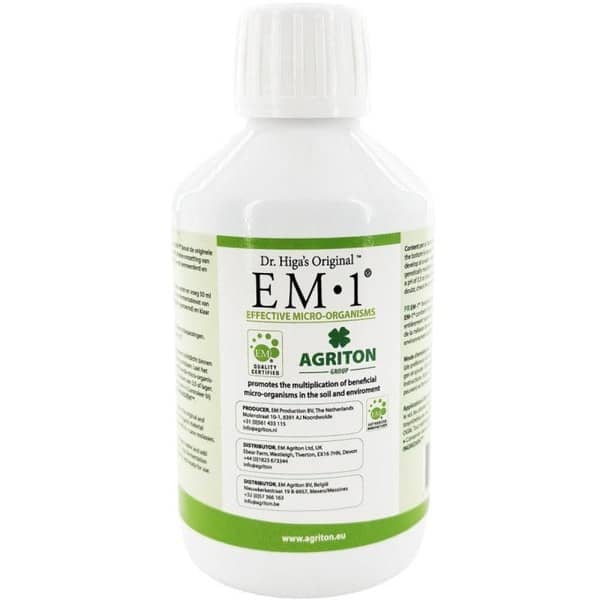
To understand why EM makes organic matter ferment rather than rot, read our guide how EM work. Before using them for the first time, take five minutes to look through the golden rules for getting started: non-chlorinated water, correct dilution, and proper storage.
As for products, two starting points are enough in most cases. EM-1 stock solution is a concentrate you multiply yourself with molasses: it is ideal for large gardens and for those who make their own bokashi activator. Microferm EM-A is already activated and simply needs to be diluted in water. If bokashi is what brought you to EM, our bokashi guide walks you through it step by step.
And if you want to know exactly what the trials say, in the garden and elsewhere, our guide what the science says about EM gives an unbiased overview.
Effective Microorganisms are mixed cultures developed in the early 1980s by Professor Teruo Higa in Okinawa and now produced under EMRO license in many countries. Labels list lactic acid bacteria, yeasts, and photosynthetic bacteria, but independent analyses mainly show lactic acid bacteria and yeasts in a sugary, very acidic medium. They are not GMOs, a fertilizer, or a disinfectant: they are first and foremost fermentation tools, to be used according to the label of the product you have chosen.
Scan the code or visit mouttafarm.com/guide: all our how-to guides, with links to the products mentioned.



 France
 Belgium
 Switzerland
 Germany
 Austria
 United Kingdom
 Italy
 Spain
 Holland
 Portugal
 Ireland
 Sweden
 Finland
 Denmark
 Greece
 Poland
 Rumania
 Czech Republic
