












Best Seller
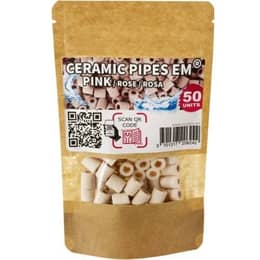
Pink EM ceramic beads | 50 beads
Removes chlorine and unwanted residues from water
$9.21 €8.25
Fast and odor-free, composting worms eat your food scraps and turn them into fertilizer for your plants.

From 2 to 4 trays, with an optional planter.

Up to 18 growing areas around a central worm composter.

Terracotta, with a flower pot.

From 2 to 4 trays, with a lower shelf.

Trays you add over time for easy vermicompost harvesting.

Turn your planters and flower beds into a worm composter: WORMacotta, In-Ground.
 Practical guide

From kitchen to garden, composting becomes simple, fast, and effective for everyone.
 Practical guide
 Practical guide
Live animals (worms and bait) and products to feed and care for pets and livestock.

Eisenia composting worms for your worm composter or compost bin.

Ultra-fresh worms: red worms, Dendros, and Canadian nightcrawlers from 3.5 oz (100 g) to 2.2 lb (1 kg).

Natural solutions dedicated to the well-being of horses, ponies, and donkeys.

Optimize the health and performance of your farm.

Mealworms: natural, nutritious supplements.
Beautify your home with our decorative pieces and care for your house in a natural, sustainable way.
Garden the eco-friendly way, in harmony with nature, for healthy, long-lasting plants.
EM-based products designed to enrich soil, protect plants, support animal health, and make everyday well-being and home care easier.

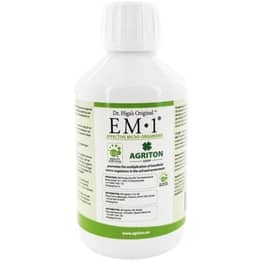
Contains a blend of 80 families of beneficial microorganisms.

Revitalize, purify, and improve water quality in all your applications.

Stimulate soil microbial activity and plant growth.

Clean and care for your surroundings naturally.

For the well-being and health of pets, livestock, and horses.

Enrich your body care and dietary routines with essential enzymes.
 Practical guidePractical guide

Effective microorganisms, or EM, have their enthusiasts and their detractors. Some credit them with almost universal effects: in the garden, around the home, on health, and even in rivers. Others see them as just another ferment, sold at a premium. We sell EM products and even make our own bokashi activator with them, which is precisely why we want to tell you what the studies really show, including when the results are disappointing.
This guide covers all uses of EM. For the bokashi bucket in particular, see our guide Bokashi and EM: what the science really says.
The blend was developed in the 1980s by Professor Teruo Higa in Japan. Since then, it has spread to many countries, and there is a wealth of literature on the subject. However, much of it comes from the manufacturer, its partners, or journals with low standards. Professor Higa himself acknowledged, in a 1994 paper, that the main limitation of this research was the lack of reproducibility and consistency in the results.
Three difficulties complicate the evaluation:
 The composition varies between products and countries. Not all labels declare the same strains.
 EM is almost always applied together with food: molasses, bran, bokashi, fermented extracts. An observed effect may come from this organic matter rather than from the microbes.
 The uses are very different: a result on compost tells you nothing about swimming pool water or human health.
Key takeawaysA good study on EM compares three situations: nothing added, the EM product, and the same product sterilized. If the sterilized product performs as well as the live one, the effect does not come from the microorganisms.
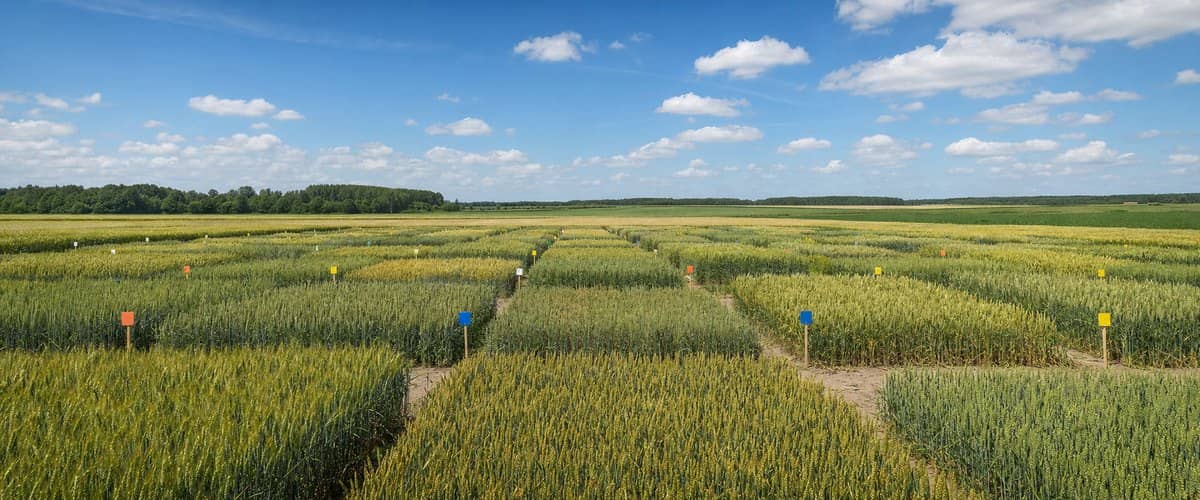
This is the most studied use, and the one where the results are most mixed.
 A four-year trial in Switzerland, on organically farmed land, compared live EM, sterilized EM, and a control. Sprayed on their own, EM had no effect on yield or on soil microbial life. With bokashi, a few differences appeared, but inconsistently, and sterilized EM performed as well as live EM: the small effects came from the nutrients in the bokashi.
 Three-year trials in Bavaria measured an 8% gain on wheat with activated EM, with no significant effect on fava beans or barley. Once the cost of the product was deducted, it was not profitable. EM ceramic, spread at 134 lb per acre (150 kg per hectare), did not improve any yield.
 A meta-analysis published in 2015, pooling 39 papers, found an average positive effect on growth, but it was small and highly variable between crops, sometimes even negative. In the field trial run by the same researchers, treated corn did not yield more. In the greenhouse, however, it was 51% more palatable to a caterpillar, because its chemical defenses were weaker. In the field, the diversity of predatory insects was also 26% lower.
 On soilborne diseases, Dutch trials found no general improvement in soil resistance, with even more diseased plants in one test, and a favorable effect in only one soil out of three for another disease.
On the other hand, several favorable reviews claim that most studies are positive. But they often simply count publications, without taking into account their quality or the absence of a sterilized control. The most encouraging results come mainly from hot climates or from pot and greenhouse trials, and do not necessarily carry over to a European vegetable garden. To judge for yourself, run a trial with a control bed, as we explain in our guide Using EM in the vegetable garden.
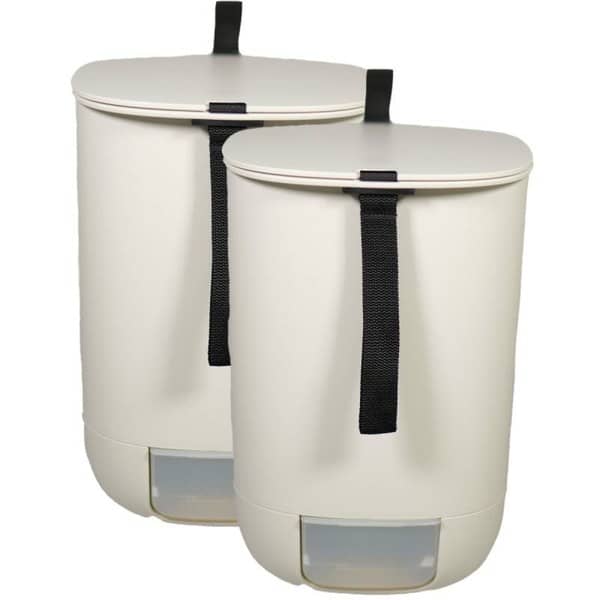
This is where EM is most at home, because it is all about fermentation, a field in which lactic acid bacteria have proven their worth for centuries.
 Lactic acid fermentation is an established mechanism: lactic acid bacteria convert sugars into acids, the pH drops, and the material is preserved instead of rotting. This is the principle behind bokashi, sauerkraut, and silage. How EM goes about it is explained in our guide How does EM work?
 For conventional compost, the available trials have shown no clear difference: a well-balanced pile already contains all the microorganisms it needs.
 For silage, the benefit of lactic acid bacteria inoculants is well demonstrated. Data specific to EM products are scarcer.
 For odors and ammonia from litter, a few poultry farming trials conducted in Asia measured a clear drop in ammonia when an EM solution was sprayed on the litter, with no effect on the animals' growth. The results are encouraging, but the trials are still few, in hot climates, with varying products and doses.
 For septic tanks, biological additives in general have shown no lasting benefit: a tank already contains enormous quantities of bacteria.

Releasing EM balls into rivers is the most publicized use. Laboratory trials claiming cleaner water often have weak protocols. The most rigorous evaluation, carried out over two years in Hawaii with a control area, found no measurable effect in the field. In tanks, the balls actually made the water worse by adding phosphorus and bacteria, and at ten times the recommended dose they depleted the oxygen. In a large European reservoir, a liquid EM lowered phosphorus one week after application, but most measurements had returned to their starting levels after two weeks. We go over these results in detail in our guide on bokashi balls for ponds.
As for claims about cleaning up contaminated soils or reducing radioactivity after nuclear accidents, they rely on documents produced by the manufacturer itself, with no independent validation. We do not repeat them.
 Drinks: published research on EM-X involves cells or rats, using an old formula based on rice, papaya, and seaweed. We have found no rigorous clinical trial in humans. The rules governing how these products may be presented are detailed in our guide EM drinks, salt, soap, and toothpaste.
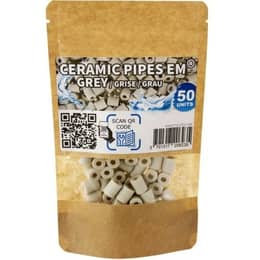
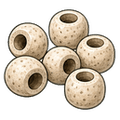 Ceramics: fired at high temperatures, they no longer contain any live microorganisms. The claimed effects on water are not supported by any independent study, and the explanations put forward do not match any known physical or chemical mechanism. Our full analysis is in the guide EM ceramics.
Did you know?In an independent evaluation, genetic analysis of an EM product found only lactic acid bacteria. The photosynthetic bacteria, often presented as the heart of the blend, were absent. The actual content may therefore vary from one product to another and from one batch to another.
Having read these studies, this is how we see EM here at Moutta Farm.
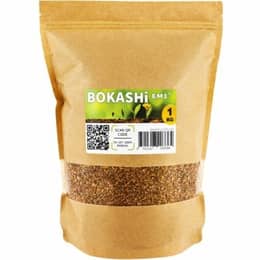
 A fermentation tool, useful for starting and securing lactic acid fermentation: bokashi bucket, fermented bran, grass clippings or manure under a tarp, silage, odor control.
 An optional aid in the garden, to be tried on just one section, without expecting a bigger harvest.
 Not a fertilizer, not a disinfectant, not a treatment for plants, animals, or people. These categories also have a precise legal meaning, explained in our guide EM and regulations.
 Not a miracle potion: we always present unproven effects as manufacturer's claims, and we remove anything pseudoscientific from our guide.
Emy's tipBefore adopting an EM product for good, split a bed, a bin, or a litter area in two: treat one half, leave the other as is, and write down your observations over a whole season. Your own comparison will be worth more than any promise.
Science confirms the core of the matter: lactic acid fermentation preserves organic matter and limits putrefaction. However, rigorous trials in temperate climates have not shown that EM increases harvests or enriches the soil in the long term, and the observed effects often come from the organic matter applied with it. The promises about rivers, health, and ceramics are unproven. We therefore see EM as a practical fermentation tool, to be used for what it does well, without believing in miracles.
Scan the code or visit mouttafarm.com/guide: all our how-to guides, with links to the products mentioned.



 France
 Belgium
 Switzerland
 Germany
 Austria
 United Kingdom
 Italy
 Spain
 Holland
 Portugal
 Ireland
 Sweden
 Finland
 Denmark
 Greece
 Poland
 Rumania
 Czech Republic
