












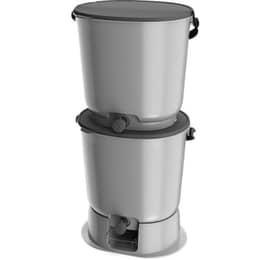
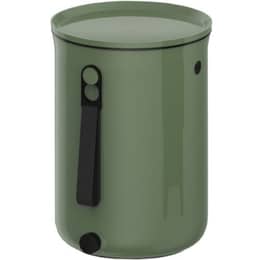
Skaza Essential Bokashi Composter
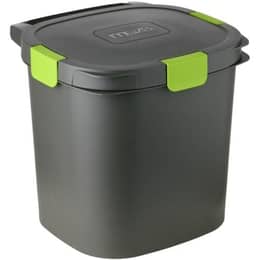
4-gallon (15.3-liter) capacity, set of 2 buckets
$71.65 €64.17
Fast and odor-free, composting worms eat your food scraps and turn them into fertilizer for your plants.

From 2 to 4 trays, with an optional planter.

Up to 18 growing areas around a central worm composter.

Terracotta, with a flower pot.

From 2 to 4 trays, with a lower shelf.

Trays you add over time for easy vermicompost harvesting.

Turn your planters and flower beds into a worm composter: WORMacotta, In-Ground.
 Practical guide

From kitchen to garden, composting becomes simple, fast, and effective for everyone.
 Practical guide
 Practical guide
Live animals (worms and bait) and products to feed and care for pets and livestock.

Eisenia composting worms for your worm composter or compost bin.

Ultra-fresh worms: red worms, Dendros, and Canadian nightcrawlers from 3.5 oz (100 g) to 2.2 lb (1 kg).

Natural solutions dedicated to the well-being of horses, ponies, and donkeys.

Optimize the health and performance of your farm.

Mealworms: natural, nutritious supplements.
Beautify your home with our decorative pieces and care for your house in a natural, sustainable way.
Garden the eco-friendly way, in harmony with nature, for healthy, long-lasting plants.
EM-based products designed to enrich soil, protect plants, support animal health, and make everyday well-being and home care easier.

Contains a blend of 80 families of beneficial microorganisms.

Revitalize, purify, and improve water quality in all your applications.

Stimulate soil microbial activity and plant growth.

Clean and care for your surroundings naturally.

For the well-being and health of pets, livestock, and horses.

Enrich your body care and dietary routines with essential enzymes.
 Practical guidePractical guide

Bokashi has its devoted fans, who credit it with every possible virtue, and its skeptics, who see nothing more than a bucket of marinated scraps sold with a miracle product. The truth lies somewhere in between, and it's more interesting than the slogans.
We make our own activator, which is all the more reason to be precise. Here is what published studies show, what they don't show, and what remains to be proven. If you're new to the method, start with our guide What is bokashi?.
In a sealed, firmly packed bucket, food scraps undergo lactic fermentation, just like cabbage in sauerkraut or grass in silage. Bacteria convert some of the sugars into acids, mainly lactic acid. In published analyses, the liquid from household buckets had a pH of 3.5 to 4.9. At this level of acidity, the microbes responsible for rotting are held back: the scraps are preserved instead of decaying.
This fermentation also uses up very little material. In a farm-scale trial, grass clippings fermented under a tarp lost only 3 to 6% of their mass in six to eight weeks, compared with about 60% for the same grass composted in open air. Nitrogen losses were 0 to 1.7%, compared with 10 to 16%. These figures come from a study involving Agriton, the manufacturer of Microferm: they are consistent with what we know about fermentation, but they should be confirmed by independent research teams.
Keep in mind, however, that once buried, bokashi is broken down by soil life, and a good part of its carbon is released, here too, as carbon dioxide. Fermentation shifts decomposition to a later stage; it doesn't eliminate it.
Key takeawaysBokashi is first and foremost a preservation method: it stabilizes food scraps and retains their nutrients. The actual transformation then takes place in the soil.
A pilot study published in 2026 analyzed the DNA of microorganisms in buckets from six households in Finland. The result is clear: lactic acid bacteria dominate at every stage, especially the genera Lentilactobacillus and Lacticaseibacillus, relatives of the cultures found in silage or kefir. Within the same household, the bucket's population often resembled that of the bran used: the activator does indeed inoculate the bucket.
Another finding: photosynthetic bacteria, often listed among the components of EM, were not found in the commercial brans analyzed, and yeasts were scarce in the bucket.
Potentially pathogenic microorganisms were present, as they are wherever there are food scraps, but in very small amounts: on average 0.2% of sequences with one analysis method, and 0.04% with the other. The authors conclude that household bokashi is probably not associated with an increased health risk. Reassuring, but six households is still only a pilot study.
That said, bokashi is not a sanitizing process. On much more heavily contaminated materials, such as feces, lactic fermentation reduces certain bacteria that indicate contamination, but it isn't enough on its own: the most resistant organisms, such as some parasite eggs, are not always eliminated. The bucket doesn't heat up and never reaches the temperatures that sanitize a well-managed compost pile. This is one of the reasons why animal waste should never go in it.
The same caution applies to pesticide residues. A small exploratory study, published in 2026, monitored buckets filled with citrus fruit treated after harvest: after six weeks, two fungicides had not disappeared and were increasingly passing into the liquid. Fermentation does not decontaminate food scraps.
Emy's tipPut on gloves to empty and bury your bucket, then wash your hands, as you would after any work with waste or soil.
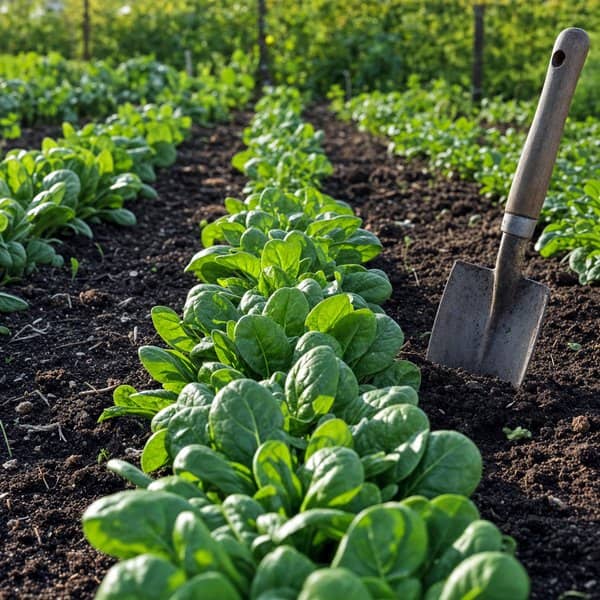
 In the vegetable garden, a trial on spinach compared kitchen bokashi with compost and vermicompost. In the greenhouse, bokashi produced as much foliage as vermicompost; in the open field, the marketable yield of the second cutting was significantly higher.
 In the nursery, a bokashi made from citrus pulp improved the germination of rootstock seeds (24% compared with 16% for the control) and the height of young plants, in a single greenhouse trial.
 Compared with compost, the advantage fades. In a pot trial, bokashi and compost made from the same scraps gave very similar results: only one comparison out of sixteen was significantly in favor of bokashi.
These trials shed light on a practical guideline. At the time of burial, soil mixed with bokashi contained 288 mg of ammonium per kilogram, compared with less than 5 mg in the control soil, a level that dropped back within a few weeks. Add the acidity and the salts, and you can see why you need to wait at least two weeks before planting.
The liquid, for its part, is rich in potassium but low in nitrogen: used on its own, it produced much less developed plants than a mineral fertilizer. On tomato plants, watering with highly diluted liquid produced stems about 13% thicker, but the difference in height was not significant, and only a few plants were tested. See Bokashi liquid: dilution, uses, and limitations.
In the field. A four-year trial in Switzerland compared live EM with sterilized EM, either alone or with agricultural bokashi. EM alone made no difference; with bokashi, a few inconsistent effects appeared, identical with live and sterilized EM: they came from the nutrients in the bokashi, not from the microorganisms. A pot trial likewise found no difference between bokashi made with and without EM.
In the bucket. Food scraps naturally carry lactic acid bacteria, and spontaneous fermentation is possible, but it's less predictable. A trial on household buckets compared live EM, sterilized EM, and scraps alone: total emissions did not differ, but methane was lower with live EM during the resting phase. So the inoculant has a measurable, but modest, effect on fermentation.
Our take. The activator mainly serves to establish a dominant lactic fermentation quickly, before rotting sets in; the bran contributes by absorbing moisture and feeding the cultures. This is how we design our Bokashi EM compost activator: insurance for success, not a magic potion. On the other hand, the idea that EM permanently colonize the soil has not been demonstrated. For dosage, see Bokashi bran; for other uses of EM, our guide What science says about effective microorganisms lays out the facts.
The household bucket trial measured carbon dioxide, methane, and nitrous oxide during fermentation. But no one has yet measured emissions from the second stage, in the ground or in a soil factory, even though that is where most of the decomposition takes place. On an agricultural scale, the grass clippings trial calculated a footprint roughly ten times lower per metric ton of material than windrow composting, but it counted only the fermentation phase and fuel, and the manufacturer was involved.
Our position: bokashi probably limits losses while food scraps are being stored, but its full climate impact has yet to be established. To compare the methods, see Bokashi, compost, or vermicompost.
 Killing weed seeds: there is no evidence of it for the kitchen bucket. An agricultural trial under a tarp found no surviving seeds, but its authors consider the question worth investigating. In silage, a very similar fermentation, most seeds die within three to six months, but hard-coated seeds often survive. Two weeks in a bucket is much shorter, so don't add weeds that have gone to seed.
 The effect on rats: no studies; well-buried bokashi is probably less attractive to them, but that's all we can say.
 Long-term effects on soil: no multi-year trials with kitchen bokashi.
 The superiority of EM over other lactic cultures: never demonstrated in a kitchen bucket.
Did you know?Most scientific publications on “bokashi” are not about the kitchen bucket, but about fermented agricultural fertilizers, widely studied in Brazil, Indonesia, and Mexico. Studies on household bokashi can still be counted on the fingers of a few hands.
Studies confirm the essentials: a lactic fermentation that acidifies and preserves food scraps with very little loss, and very few pathogens in the buckets analyzed. The effects on plants are encouraging but modest, close to those of a good compost, and come mainly from the organic matter; the activator, for its part, helps the fermentation succeed. The absence of greenhouse gas emissions, the killing of weed seeds, the effect on rats, and sanitization all remain to be proven. It's a good tool for returning your scraps to the soil, without overblown promises.
Scan the code or visit mouttafarm.com/guide: all our how-to guides, with links to the products mentioned.



 France
 Belgium
 Switzerland
 Germany
 Austria
 United Kingdom
 Italy
 Spain
 Holland
 Portugal
 Ireland
 Sweden
 Finland
 Denmark
 Greece
 Poland
 Rumania
 Czech Republic
