












Best Seller
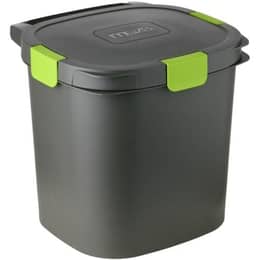
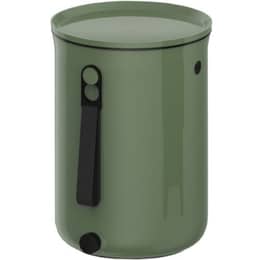
Bokashi Composter Confort
3.7-gallon (14-liter) capacity, sold individually or as a set of 2
$45.59 €40.83
Fast and odor-free, composting worms eat your food scraps and turn them into fertilizer for your plants.

From 2 to 4 trays, with an optional planter.

Up to 18 growing areas around a central worm composter.

Terracotta, with a flower pot.

From 2 to 4 trays, with a lower shelf.

Trays you add over time for easy vermicompost harvesting.

Turn your planters and flower beds into a worm composter: WORMacotta, In-Ground.
 Practical guide

From kitchen to garden, composting becomes simple, fast, and effective for everyone.
 Practical guide
 Practical guide
Live animals (worms and bait) and products to feed and care for pets and livestock.

Eisenia composting worms for your worm composter or compost bin.

Ultra-fresh worms: red worms, Dendros, and Canadian nightcrawlers from 3.5 oz (100 g) to 2.2 lb (1 kg).

Natural solutions dedicated to the well-being of horses, ponies, and donkeys.

Optimize the health and performance of your farm.

Mealworms: natural, nutritious supplements.
Beautify your home with our decorative pieces and care for your house in a natural, sustainable way.
Garden the eco-friendly way, in harmony with nature, for healthy, long-lasting plants.
EM-based products designed to enrich soil, protect plants, support animal health, and make everyday well-being and home care easier.

Contains a blend of 80 families of beneficial microorganisms.

Revitalize, purify, and improve water quality in all your applications.

Stimulate soil microbial activity and plant growth.

Clean and care for your surroundings naturally.

For the well-being and health of pets, livestock, and horses.

Enrich your body care and dietary routines with essential enzymes.
 Practical guidePractical guide

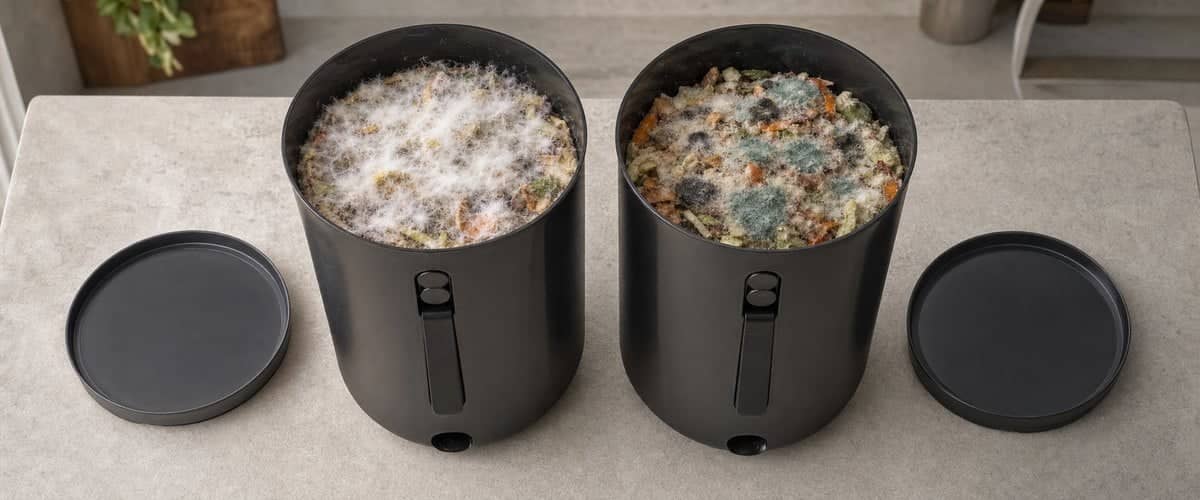
You lift the lid of your bucket and find a fuzzy layer on your food scraps. Don't panic: in bokashi, mold isn't necessarily a bad sign. It all depends on its color, how far it has spread, and above all, the smell that comes with it.
A white film is actually reassuring. Green, blue, or black spots, on the other hand, mean you need to act, but rarely that you have to throw everything out. Here's how to read what you see, respond step by step, and keep it from happening again.
A fine, fluffy white fuzz, sometimes in small patches, covering the surface of the scraps or the grains of bran: this is the most common sign of successful fermentation. All reliable sources agree on this, from our instructions to those of the manufacturers and gardening guides. It usually comes with a sour smell, like pickles or vinegar, sometimes slightly alcoholic.
Don't remove it and don't mix it in: just keep filling your bucket as usual, layer by layer. You'll often find this same white film on the contents of a bucket that's ready to bury, and even on our activator or on well-fermented homemade bran. To learn how to tell when a bucket is done, see the guide How long does fermentation take?
Did you know?Bokashi barely changes the appearance of food: a carrot stays a carrot, just softer. It's the sour smell and the white film that tell you fermentation has taken hold, not the look of the scraps.
Colored mold, whether green, blue-green, gray, or black, shows that in that spot, lactic fermentation hasn't won out. Air, excess moisture, or too little bran has allowed other microorganisms to take hold. If the smell is still sour, the problem is localized. If it turns putrid (rotten eggs, spoiled meat, sewage), decomposition has started to replace fermentation.
 Food that was already moldy before it went into the bucket: a bread heel or a piece of fruit forgotten in the fridge brings its own mold with it. The spot then stays limited to that item. Remove it, or avoid adding leftovers that are visibly moldy.
 The natural color of the scraps: coffee grounds, tea leaves, avocado skins, or green vegetables darken as they ferment. That's not fuzz, it's the food itself.
 Colored liquid: brown, orange, or cloudy depending on what you've added, it's nothing to worry about as long as it smells sour.
Colored mold almost always comes down to one or more of these causes:
 Air: lid not properly closed, dirty seal, spigot left open, opening the bucket too often, scraps not pressed down enough, or a bucket left almost empty for a long time at the start.
 Too little bran: each layer must be completely covered. Meat, fish, and very wet leftovers need more.
 Too much moisture: liquid not drained often enough, soggy peels, leftovers in sauce. A bucket bottom soaked with liquid encourages colored mold.
 Too much heat: a bucket in direct sun or right next to a heater can start to rot.
 Bran that's too old or poorly stored: if it smells musty or no longer smells of anything, it won't get fermentation going properly. See the guide Bokashi bran.
One or two colored spots, anywhere from the size of a coin to the size of a hand, and a smell that's still sour? The bucket can easily be saved:
 Scoop out the affected area with a spoon, along with a little of the material around it, and dispose of it with your food scraps collection or in your backyard composter.Sprinkle a good handful of bran over the entire surface, more generously than usual.
 Press down firmly to push out the air.Drain the leachate, then make sure the spigot is fully closed.
 Clean the rim and the lid seal before closing.
The next time you add scraps, take a sniff: if the smell is distinctly sour, fermentation has taken over again. Carry on as normal, being a little more generous with the bran for a few layers.
Emy's tipLay a sheet of newspaper, or a clean freezer bag, flat on the top layer before closing. It limits the air in contact with the scraps and absorbs condensation. Remove it the next time you add scraps, then put it back on top.
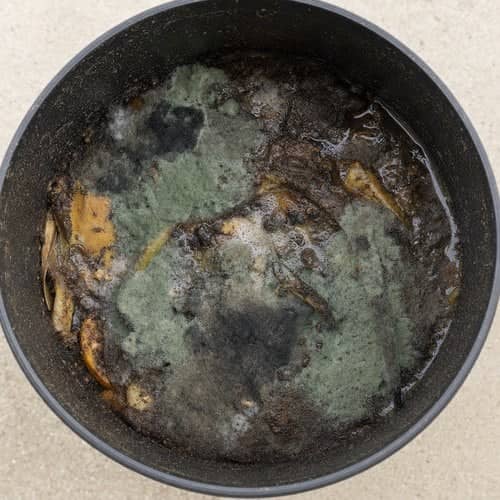 When colored mold covers a large part of the surface, or keeps coming back despite your fixes, and the smell has turned putrid, the fermentation has failed. There's no point in continuing to fill this bucket: the contents won't turn into a good pre-compost. But "throwing it out" doesn't necessarily mean "putting it in the trash."
Our instructions recommend emptying moldy contents into the household trash. Today we'd qualify that advice: only a bucket that's truly overrun and foul-smelling needs to be disposed of, and there are better options than the regular trash can.
 Bury it away from your plantings: this is the most common solution. Dig a hole at least 11.8 in (30 cm) deep in a corner of the yard that won't be planted in the coming months, away from roots. Empty the contents into it, sprinkle in two or three handfuls of bran, mix with the soil, and fill the hole back in well. Leave it for at least a month, and longer in cold weather.
 Add it to an active compost pile, but only if it's mostly plant scraps: place it in the center of the pile and cover it with a thick layer of brown material. Avoid this option if the bucket contains a lot of meat or fish.
 Your town's food scrap collection, if there is one where you live: it's a simple solution with no risk of odors in the yard.
 The regular trash can, as a last resort, if you have no other option.
Open the bucket outdoors and avoid breathing over it while you empty it. Wash your hands afterward. Rinse the bucket with very hot water, carefully scrub the seal, the drainage grate, and the spigot, then let it air-dry with the lid open before starting again. No need for detergent: a thorough rinse and scrub are enough.
Key takeawaysA step-by-step response: white film, keep going; a few colored spots with a sour smell, remove them, add bran, press down, and drain; a bucket overrun with mold that smells rotten, bury it away from your plantings and start over.
 Fill in layers of 1.2–2 in (3–5 cm), each one fully sprinkled with bran, then pressed down. When starting out, begin with at least 1 to 2 quarts (1 to 2 liters) of scraps so the bucket isn't left half full of air for long.Be generous with the bran, especially at the beginning, with meat and fish, and for wet scraps. A 20 ml measuring spoon helps keep your dosing consistent.
 Open it as little as possible: collect your scraps in a small countertop pail and empty it into the bucket once a day, or every other day.Drain the leachate regularly, every two or three days, and let soggy peels drip before adding them. All the techniques are in the guide Looking after your bokashi.
 Keep the bucket out of the sun, ideally at 64–77 °F (18–25 °C).
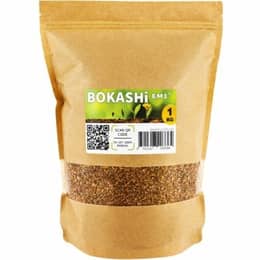
 Store your bran somewhere dry, in a tightly closed container, and replace it if it smells musty. Our Bokashi EM compost activator keeps easily this way.
If your bucket smells bad but shows no mold, the diagnosis is a little different: see our guide Bad smells, too much liquid, fruit flies.
In bokashi, a white film is a good sign: it goes hand in hand with successful fermentation and needs no action. Green, blue, or black mold points to too much air or moisture, or too little bran. A few spots are easy to fix by removing the area, adding bran, pressing down, and draining. Only a bucket that's overrun with mold and smells putrid needs to be disposed of, ideally by burying it away from your plantings rather than putting it in the trash. After that, well-sprinkled and firmly pressed layers, a bucket that's rarely opened, and regularly drained leachate are all it takes to keep it from happening again.
Scan the code or visit mouttafarm.com/guide: all our how-to guides, with links to the products mentioned.



 France
 Belgium
 Switzerland
 Germany
 Austria
 United Kingdom
 Italy
 Spain
 Holland
 Portugal
 Ireland
 Sweden
 Finland
 Denmark
 Greece
 Poland
 Rumania
 Czech Republic
