












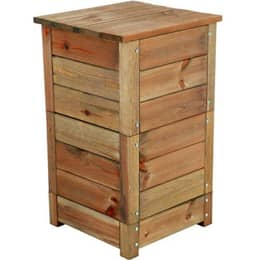
WORMWood Worm Composter
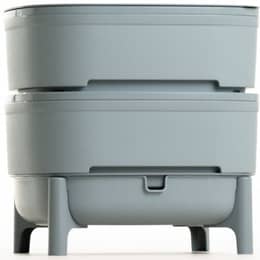
Wooden, with 2 trays, 6.9 gallons (26 liters) usable per tray
$92.11 €82.50
Fast and odor-free, composting worms eat your food scraps and turn them into fertilizer for your plants.

From 2 to 4 trays, with an optional planter.

Up to 18 growing areas around a central worm composter.

Terracotta, with a flower pot.

From 2 to 4 trays, with a lower shelf.

Trays you add over time for easy vermicompost harvesting.

Turn your planters and flower beds into a worm composter: WORMacotta, In-Ground.
 Practical guide

From kitchen to garden, composting becomes simple, fast, and effective for everyone.
 Practical guide
 Practical guide
Live animals (worms and bait) and products to feed and care for pets and livestock.

Eisenia composting worms for your worm composter or compost bin.

Ultra-fresh worms: red worms, Dendros, and Canadian nightcrawlers from 3.5 oz (100 g) to 2.2 lb (1 kg).

Natural solutions dedicated to the well-being of horses, ponies, and donkeys.

Optimize the health and performance of your farm.

Mealworms: natural, nutritious supplements.
Beautify your home with our decorative pieces and care for your house in a natural, sustainable way.
Garden the eco-friendly way, in harmony with nature, for healthy, long-lasting plants.
EM-based products designed to enrich soil, protect plants, support animal health, and make everyday well-being and home care easier.

Contains a blend of 80 families of beneficial microorganisms.

Revitalize, purify, and improve water quality in all your applications.

Stimulate soil microbial activity and plant growth.

Clean and care for your surroundings naturally.

For the well-being and health of pets, livestock, and horses.

Enrich your body care and dietary routines with essential enzymes.
 Practical guidePractical guide

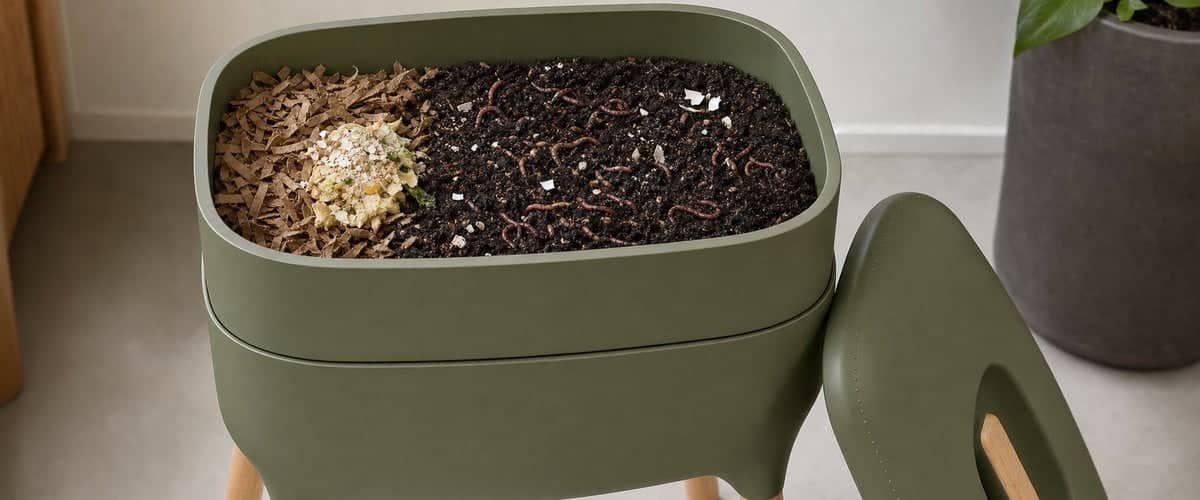
Do you already have a worm composter and are wondering whether to add a bokashi bucket? Or the other way around? The two methods work well together, especially in an apartment: bokashi takes the leftovers worms don't like, and the worms can then finish the job on the fermented pre-compost.
But combining them takes a little finesse. Bokashi is acidic, and worms like a neutral environment. Here's how to make the two coexist without putting your colony under stress, and what you can honestly expect from it.
A worm bin runs mainly on peels and food scraps. Meat, fish, dairy, dishes with sauce, or large amounts of citrus have no place in it, as we explain in our guide What should you feed your worms?. A bokashi bucket, on the other hand, accepts most of these leftovers.
By combining the two, you can recycle almost all your food scraps without a yard:
 peels and coffee grounds go straight to the worms;
 meal leftovers, meat and fish cut into small pieces, and citrus go into the bokashi;
 some of the fermented bokashi then goes into the worm composter, a little at a time.
If you don't have one yet, a tray model such as the WORMbox worm composter lends itself well to this combination, since it's easy to set aside a corner for bokashi. Bokashi also has an advantage for worms: the material has already been softened by fermentation, so it's easy to break down for the microorganisms the worms feed on.
 Composting worms thrive in an environment with a pH close to neutral, between 7 and 8. Fermented bokashi, however, is very acidic: its liquid has a pH of 3.5 to 4.9, depending on the measurements. Added in large quantities, it lowers the pH of all the bedding, and the worms have nowhere left to escape it.
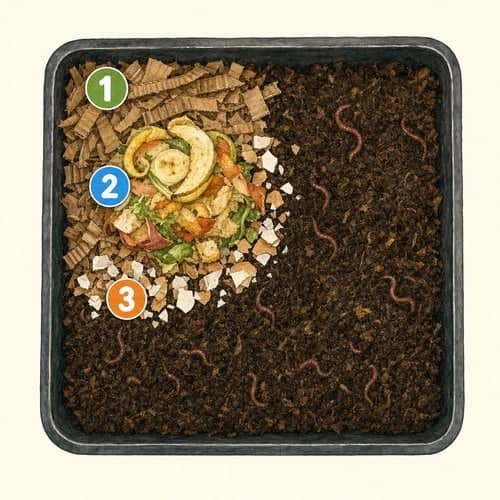
Worms can still cope with acidic food, on one condition: they must be able to avoid it. Placed in a corner, the bokashi is ignored at first for a few days, sometimes one to two weeks, while its acidity drops through contact with the bedding. Then the worms move in and eat it.
Another thing to watch: salt. Leftovers from cooked dishes make bokashi saltier, and salt dehydrates worms. In fact, in a field trial comparing worms fed with or without bokashi, the "bokashi" samples were higher in sodium. In the diagram: a bed of dry cardboard (1), a small portion of bokashi (2), and crushed eggshells (3), in just one corner of the tray.
Did you know?One composter who dumped too much bokashi into an indoor worm bin all at once watched the whole bin turn sour. The same bokashi, given in smaller amounts to a large outdoor bin, was eaten quickly. So it all comes down to the dose.
Gradually increase the amounts while keeping an eye on your worms. The rest of the bucket can wait, closed, for several weeks, or go into a soil bin, as explained in our guide No yard? What to do with your bokashi.
Emy's tipMix the bokashi with at least the same amount of shredded cardboard, newspaper, or coconut coir before adding it to the bin. This bedding absorbs excess moisture, dilutes the acidity, and gives the worms material they love.
If your worms are sensitive, or if you're just starting out, first leave the bokashi in a soil bin for two to three weeks. Its acidity drops, it partly breaks down, and you can then give it to the worms without any risk of throwing the bin off balance. It takes longer, but it's the safest method.
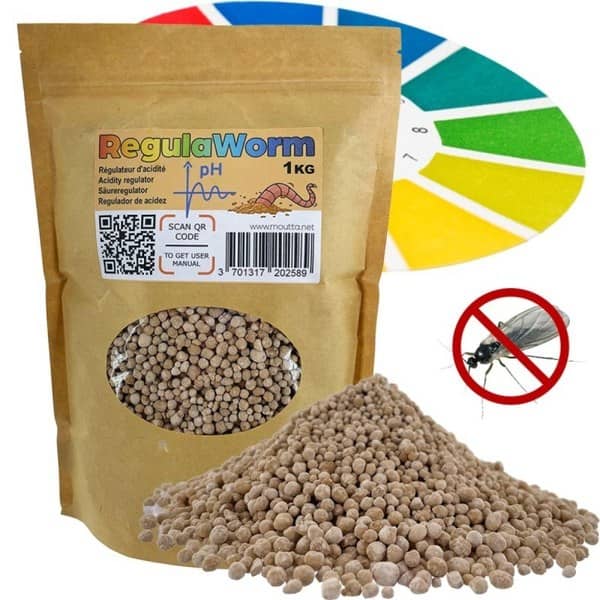
Crushed eggshells are the simplest fix: dried, then ground into a powder, they gradually dissolve in contact with the acidic environment. Our RegulaWorm, a 100% natural lime-based blend designed for worm composters, works faster: one tablespoon a week is enough, and it's a good solution if you don't eat eggs. Other composters use a mild liming amendment, such as dolomitic lime or agricultural lime (calcium carbonate), in small amounts.
Never use quicklime or construction lime: they are caustic to worms and microorganisms. And there's no need to try to neutralize the whole bucket: one corner of the bin and good bedding are enough in most cases.
 The worms climb up the walls or flee the tray.
 A sour or rotten smell lingers throughout the bin.
 The bedding becomes soggy, or fruit flies multiply.
If that happens, stop the bokashi, remove anything that hasn't been eaten, and add a thick layer of dry bedding and crushed eggshells. Our guide Worms escaping from the worm bin explains the steps to restore the balance.
Bokashi is often presented as a way to get "enriched" vermicompost. The data don't support that claim. A field trial conducted over several seasons, comparing worms fed with or without bokashi, found the results inconclusive. The vermicompost made with bokashi was actually slightly lower in calcium, magnesium, and potassium and contained more sodium, and the authors felt the benefit might not justify the extra cost and work.
Our takeaway: combining bokashi and worms is above all a practical way to recycle more food scraps without a yard, not a recipe for better vermicompost. If you can only choose one method for your peels and scraps, the worm composter remains the most complete, as we explain in our guide Bokashi, compost, or vermicompost: which method should you choose?.
Key takeawaysBokashi and worms get along well in small doses: drained, mostly plant-based bokashi, placed in one corner on dry bedding, with crushed eggshells, and never more than the worms can eat in a few days.
Bokashi lets you handle the leftovers worms refuse, and the worms can then finish off part of the pre-compost. The key is moderation: bokashi is acidic and sometimes salty, so give it in small amounts, in one corner of the bin, on dry bedding, with crushed eggshells. Watch your worms, increase gradually, and go through a soil bin if you want to play it safe. This way, you'll recycle almost all your food scraps, though without any promise of richer vermicompost.
Scan the code or visit mouttafarm.com/guide: all our how-to guides, with links to the products mentioned.



 France
 Belgium
 Switzerland
 Germany
 Austria
 United Kingdom
 Italy
 Spain
 Holland
 Portugal
 Ireland
 Sweden
 Finland
 Denmark
 Greece
 Poland
 Rumania
 Czech Republic
