











Best Seller
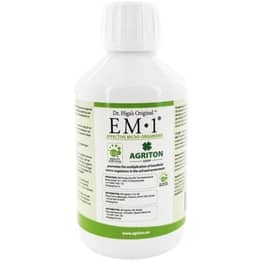
EM-1 mother solution of effective microorganisms | 250 ml bottle
250 ml, 1 and 10 liter bottles
$12.68 €11.36
Fast and odor-free, composting worms eat your food scraps and turn them into fertilizer for your plants.

From 2 to 4 trays, with an optional planter.

Up to 18 growing areas around a central worm composter.

Terracotta, with a flower pot.

From 2 to 4 trays, with a lower shelf.

Trays you add over time for easy vermicompost harvesting.

Turn your planters and flower beds into a worm composter: WORMacotta, In-Ground.
 Practical guide

From kitchen to garden, composting becomes simple, fast, and effective for everyone.
 Practical guide
 Practical guide
Live animals (worms and bait) and products to feed and care for pets and livestock.

Eisenia composting worms for your worm composter or compost bin.

Ultra-fresh worms: red worms, Dendros, and Canadian nightcrawlers from 3.5 oz (100 g) to 2.2 lb (1 kg).

Natural solutions dedicated to the well-being of horses, ponies, and donkeys.

Optimize the health and performance of your farm.

Mealworms: natural, nutritious supplements.
Beautify your home with our decorative pieces and care for your house in a natural, sustainable way.
Garden the eco-friendly way, in harmony with nature, for healthy, long-lasting plants.
EM-based products designed to enrich soil, protect plants, support animal health, and make everyday well-being and home care easier.

Contains a blend of 80 families of beneficial microorganisms.

Revitalize, purify, and improve water quality in all your applications.

Stimulate soil microbial activity and plant growth.

Clean and care for your surroundings naturally.

For the well-being and health of pets, livestock, and horses.

Enrich your body care and dietary routines with essential enzymes.
 Practical guidePractical guide

The same blend of microorganisms can end up in a watering can, a cleaning bucket, a feeder, or a glass. Yet the law treats it differently in each of these cases. It's not the presence of microorganisms that determines a product's status, but the use it's intended for and the claims made about it.
This guide outlines the main frameworks that apply in France and the European Union. It will help you read a label and understand why we use cautious wording throughout this guide.
Depending on what it claims, an EM-based product can fall under very different regulatory regimes:
 feeding plants or improving the soil: fertilizing product or biostimulant;
 protecting plants against diseases or pests: plant protection product;
 cleaning: detergent;
 disinfecting, destroying germs or algae: biocide;
 feeding an animal: animal feed or feed additive; treating it: veterinary medicine;
 being drunk or eaten: food;
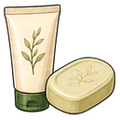 being applied to the body: cosmetic.
The stronger the claim, the stricter the regime. A cleaning product that started claiming to "kill bacteria" would change category and would need an authorization it doesn't have.
Key takeawaysThe same liquid can be legal as a cleaner and illegal as a disinfectant. What counts is the claim made on the label, on a website, or in an ad.
In France, the Rural Code requires fertilizing materials, growing media, and biostimulants to obtain a national marketing authorization. There are exemptions, notably for products that comply with a mandatory standard or with the European fertilizer regulation.
That European regulation, Regulation (EU) 2019/1009, allows a microbial biostimulant to be sold with the CE marking throughout the EU. But at present, it only permits this for four groups of microorganisms: Azotobacter, Azospirillum, Rhizobium, and mycorrhizal fungi, with no treatment other than drying or freeze-drying. EM are not among them. An extension of the list is in the works, with the first additions expected starting in 2027.
In addition, EU organic farming regulations allow microorganism preparations to be used to improve the general condition of the soil or the availability of nutrients. That doesn't, however, make these preparations fertilizers.
That's why we never present an EM product as a fertilizer or a biostimulant, and why our gardening guides, such as Using EM in the vegetable garden, refer to a "microbial preparation for the soil."
Any product intended to protect plants against harmful organisms (fungi, insects, bacteria) is a plant protection product as defined by Regulation (EC) No 1107/2009. Microorganisms are no exception: they must be approved as active substances at the European level, and the product must then obtain a national authorization. In France, using an unauthorized product, or possessing one for use, is a criminal offense (Article L. 253-17 of the Rural Code).
To our knowledge, no EM product is authorized on this basis. A foliar product can therefore be presented as plant care, never as protection against mildew or aphids. That's the whole point of our guide Spraying EM on foliage with Previsan S.
Regulation (EU) No 528/2012 defines a biocide as a product intended to destroy, deter, render harmless, prevent the action of, or otherwise exert a controlling effect on harmful organisms by any means other than mere physical or mechanical action. Disinfectants, algaecides, and pool treatments fall into this category. They require approved active substances and an authorization.
An EM cleaner that simply cleans and reduces odors remains a detergent. The new European detergents regulation, Regulation (EU) 2026/405, which applies starting September 23, 2029, specifically governs detergents containing microorganisms:
Products placed on the market before that date under the current rules may continue to be sold.
We explain how to use an EM cleaner properly in our guide Natural cleaning with EM Clean.
Did you know?A 2015 European decision ruled that bacterial cultures intended to reduce sludge and organic matter in ponds are not biocides, even if they limit algae as a side effect. They would become biocides if they were sold as algaecides.
For a pond, the same logic applies: you can talk about helping sludge break down, not about getting rid of algae. For a swimming pool, products that disinfect the water are biocides, and pools open to the public are also subject to the French Public Health Code (see EM and swimming pools). Finally, the French Environmental Code penalizes discharges that harm aquatic environments: never pour anything into a river or public pond, not even EM balls.
Animal feed (feed materials, complementary feeds such as fermented bran) is governed by Regulation (EC) No 767/2009. Claims must be objective and verifiable, and may not attribute to the feed the ability to prevent, treat, or cure a disease, apart from rare exceptions provided for in the legislation. Additives, including microorganisms added for a specific effect (silage preservatives, gut flora stabilizers), fall under Regulation (EC) No 1831/2003 and must be authorized at the European level.
 When the status is in doubt, a product claiming a health effect is treated as a veterinary medicine.
EM drinks and salt are foods. Regulation (EC) No 1924/2006 only permits health claims that appear on a European list. The word "probiotic" is considered a health claim, and none has been authorized; France tolerates it only on dietary supplements, under certain conditions.
Body soap and toothpaste are cosmetics, governed by Regulation (EC) No 1223/2009: safety assessment, a responsible person in the EU, truthful and substantiated claims, and no promise of treatment. You'll find full details in our guide EM drinks, salt, soap, and toothpaste.
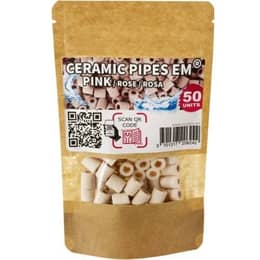
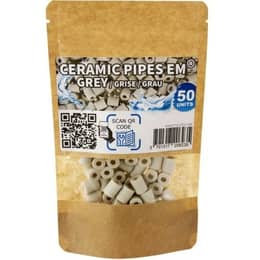
EM ceramics are objects. When placed in drinking water, they become food-contact materials, which must not release anything harmful into the water. As with any product, the claims that accompany them must be fair: presenting an unproven effect as established may amount to a misleading commercial practice.
Directive (EU) 2024/825 bans generic environmental claims, such as "eco-friendly" or "environmentally friendly," when the seller cannot demonstrate recognized excellent environmental performance. Member States were required to transpose it into national law, to apply starting September 27, 2026. In France, the transposition law was still being debated in Parliament in fall 2026, but the Environmental Code already prohibits labeling a product or its packaging as "biodegradable" or "environmentally friendly." A natural product is not exempt from these rules: describe its composition, not its virtues.
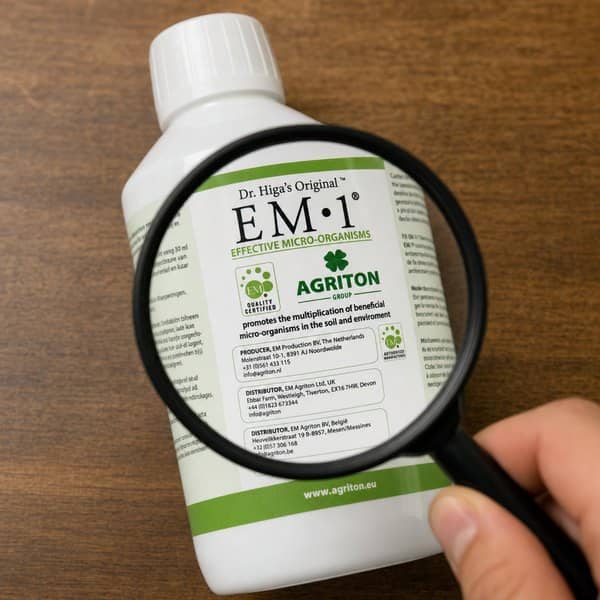
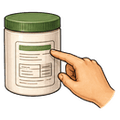 The stated use: cleaning, feeding, care? It tells you which regime the product falls under.
 An authorization number: if there is one, it appears on the label. Its absence is perfectly normal for a detergent or a food, but it rules out any claim of disinfection or plant protection.
 The composition, the use-by date, and the lot number.
 Precautions: incompatibilities, storage, any hazard statements.
Emy's tipBe wary of words such as "disinfects," "anti-algae," "cures," "protects against," or "probiotic" on a product that is neither an authorized biocide, nor an authorized plant protection product, nor a dietary supplement: ask the seller before you buy.
To find out what studies really show, beyond legal status, read our guide What science says about EM.
In France and the European Union, an EM product has no single status: its use and its claims determine whether it's classified as a fertilizing product, plant protection product, detergent, biocide, animal feed, food, or cosmetic. EM cannot be sold as CE-marked biostimulants, and to our knowledge, none is authorized as a plant protection product or as a disinfectant. That's why we talk about fermentation, cleaning, care, and composition, never about treating, disinfecting, or fertilizing.
Scan the code or visit mouttafarm.com/guide: all our how-to guides, with links to the products mentioned.



 France
 Belgium
 Switzerland
 Germany
 Austria
 United Kingdom
 Italy
 Spain
 Holland
 Portugal
 Ireland
 Sweden
 Finland
 Denmark
 Greece
 Poland
 Rumania
 Czech Republic
