












Best Seller
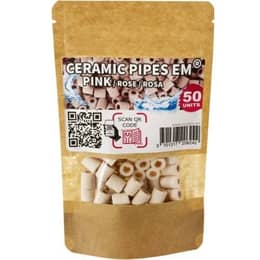
Pink EM ceramic beads | 50 beads
Removes chlorine and unwanted residues from water
$9.21 €8.25
Fast and odor-free, composting worms eat your food scraps and turn them into fertilizer for your plants.

From 2 to 4 trays, with an optional planter.

Up to 18 growing areas around a central worm composter.

Terracotta, with a flower pot.

From 2 to 4 trays, with a lower shelf.

Trays you add over time for easy vermicompost harvesting.

Turn your planters and flower beds into a worm composter: WORMacotta, In-Ground.
 Practical guide

From kitchen to garden, composting becomes simple, fast, and effective for everyone.
 Practical guide
 Practical guide
Live animals (worms and bait) and products to feed and care for pets and livestock.

Eisenia composting worms for your worm composter or compost bin.

Ultra-fresh worms: red worms, Dendros, and Canadian nightcrawlers from 3.5 oz (100 g) to 2.2 lb (1 kg).

Natural solutions dedicated to the well-being of horses, ponies, and donkeys.

Optimize the health and performance of your farm.

Mealworms: natural, nutritious supplements.
Beautify your home with our decorative pieces and care for your house in a natural, sustainable way.
Garden the eco-friendly way, in harmony with nature, for healthy, long-lasting plants.
EM-based products designed to enrich soil, protect plants, support animal health, and make everyday well-being and home care easier.

Contains a blend of 80 families of beneficial microorganisms.

Revitalize, purify, and improve water quality in all your applications.

Stimulate soil microbial activity and plant growth.

Clean and care for your surroundings naturally.

For the well-being and health of pets, livestock, and horses.

Enrich your body care and dietary routines with essential enzymes.
 Practical guidePractical guide

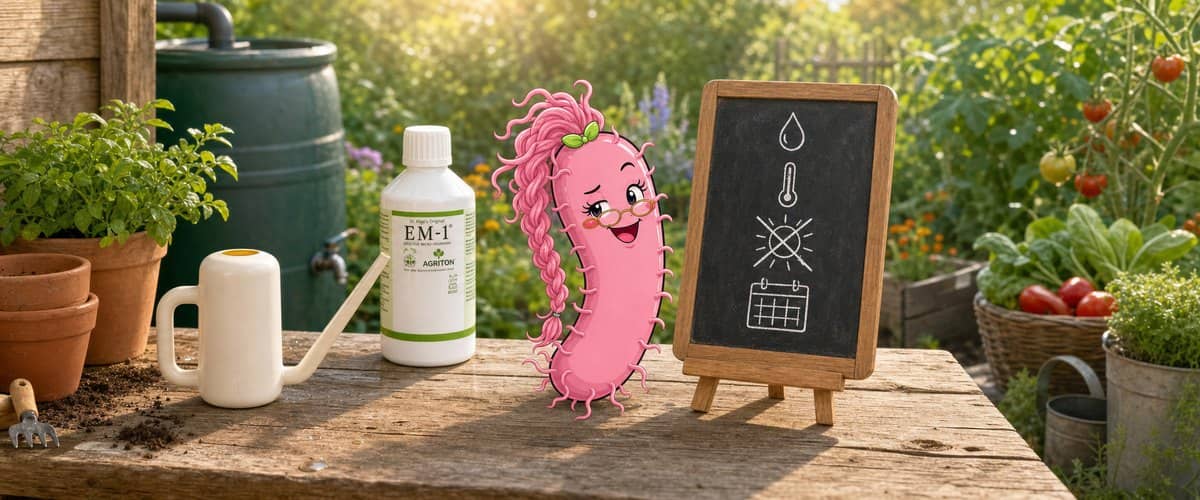
Effective microorganisms (EM) are easy to use, but they're living organisms. Chlorinated water, a poorly rinsed sprayer, or a jug left out in full sun is enough to weaken them. Most disappointments come from these small mistakes, far more than from the product itself.
Here are the golden rules we recommend before you use EM for the first time, whether in the garden or around the house. They apply to EM-1, Microferm, and most of the liquid products in our lineup. For exact doses, your product's label is always the final word.
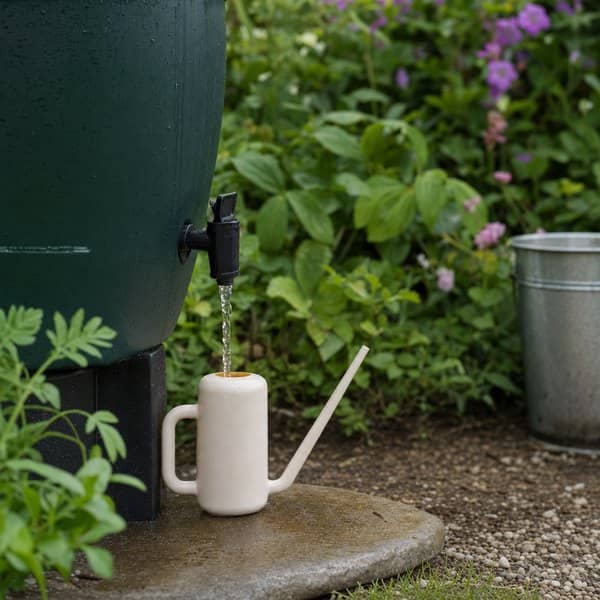
The chlorine in tap water is there to keep microbes in check, and it does the same to the microorganisms in EM. Manufacturers list it among the incompatibilities, and our own activator recipe points it out too: chlorinated water can prevent fermentation.
 Rainwater is ideal, as long as it's clean and stored away from light.
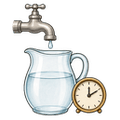 Tap water works if you let it sit for 24 hours in an open container: chlorine is volatile, so it evaporates. The larger the surface, the faster this happens.
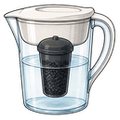 Water filtered through activated carbon also works.
Some water systems disinfect with chloramines, which are more stable and don't evaporate. If in doubt, check with your water utility or use rainwater. Use lukewarm rather than cold water for activation, and never hot water.
Emy's tipAlways keep an open watering can or jug of tap water next to your EM products. That way, on the day you need it, your water has already had time to sit.
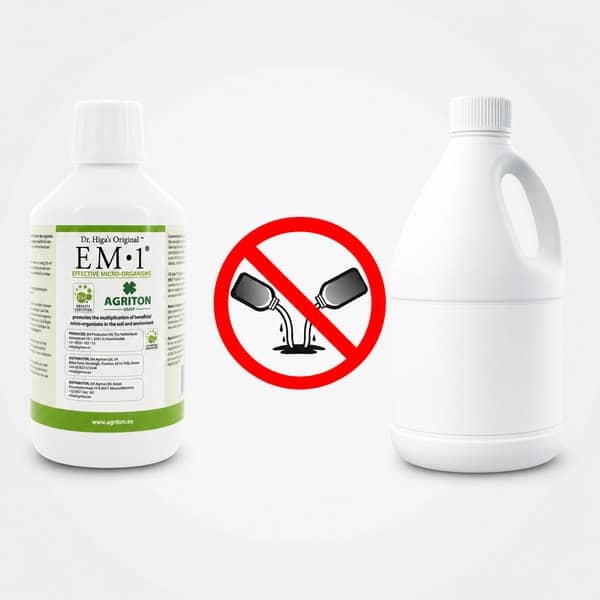
The technical data sheets are clear: bleach, chlorinated water, bactericides, fungicides, and oxidizing products reduce the survival of the microorganisms. Mix the two, and one simply cancels out the other.
Choose food-grade plastic or glass containers: EM solutions are acidic and can corrode some metals.
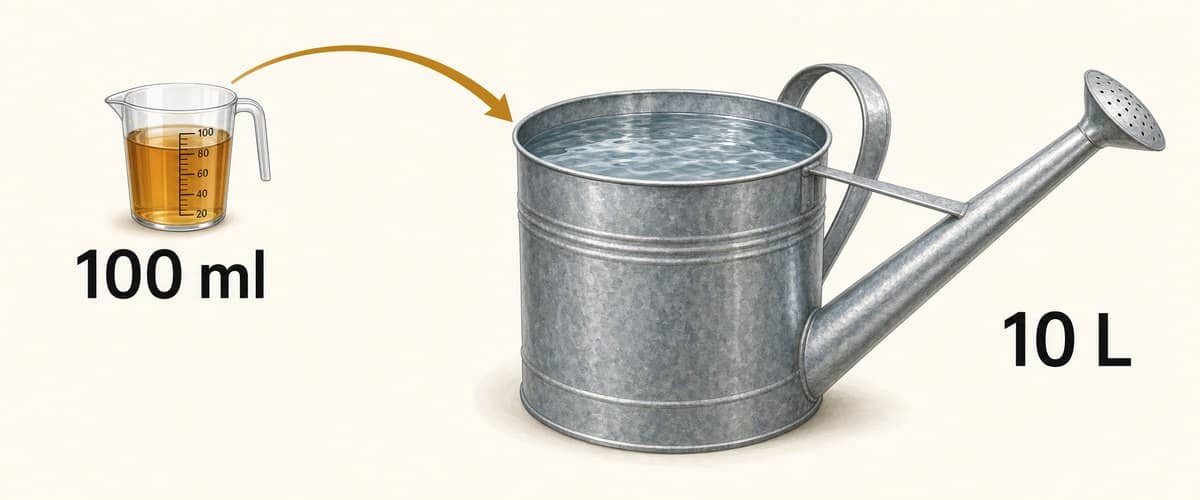
An EM solution is very acidic, with a pH of around 3.5. Undiluted, it can damage roots and foliage, so it's almost always diluted. Here are the most common guidelines, based on the manufacturers' instructions:
These figures vary from one manufacturer to another: for watering, you'll find dilutions ranging from 1:100 to 1:1000. Always follow the one for your product, and mix your solution right before you use it.
Did you know?A "1:100" dilution means one part product to one hundred parts water. An easy way to remember it: 1:100 is a 0.34 fl oz (10 ml) capful in about a quart (1 liter) of water; 1:500 is the same capful in 1.3 gallons (5 liters).
Professor Teruo Higa recommended several small applications rather than one large one, and the product instructions follow the same principle: increase the frequency, not the dose. This advice comes from the manufacturer and hasn't been tested in independent trials, but it makes sense: overdosing wastes product and increases acidity, with no proven benefit.
In practice, it's better to water the vegetable garden every two weeks at the right dilution than to pour on about a quart (1 liter) of nearly undiluted product all at once. In the garden, apply preferably in cloudy or damp weather, in the morning or evening, since the microorganisms don't handle full sun and drought well.
A slightly bulging bottle or a whitish film on the surface is normal: it's a living culture. A distinctly rotten smell, on the other hand, means the product has gone bad. We cover these signs in detail in our guide storing your EM and diagnosing a failed EM-A. Keep your products out of the reach of children and avoid contact with the eyes; in case of splashes, rinse with clean water.
Some effects show up quickly, like a litter box that smells less. Others, in the garden, are slow and subtle, and published studies show that they don't always appear. The best way to find out whether EM does anything for you is to run your own trial:
Key takeawaysA control area is worth more than any testimonial: it's the only honest way to find out what EM changes for you, in your soil and with your gardening habits.
To see what trials carried out elsewhere have shown, check out our guide what science says about EM.
To get started with no preparation needed, Microferm EM-A is the simplest option for the garden, and EM Clean for the home. If you're not sure which product to choose, our guide choosing the right EM product will help.
To succeed with EM: use non-chlorinated water, never mix with bleach or treatment products, dilute according to the label, apply small repeated doses rather than one large one, and store somewhere cool, away from light and frost. Finally, compare with a control area so you can judge for yourself. These simple habits prevent the vast majority of failures and help you get the most out of your products.
Scan the code or visit mouttafarm.com/guide: all our how-to guides, with links to the products mentioned.




 France
 Belgium
 Switzerland
 Germany
 Austria
 United Kingdom
 Italy
 Spain
 Holland
 Portugal
 Ireland
 Sweden
 Finland
 Denmark
 Greece
 Poland
 Rumania
 Czech Republic
