












EASY-TURN handle for Maze 245L rotating composter
Less effort thanks to the 3-gear system
$37.12 €33.25
Fast and odor-free, composting worms eat your food scraps and turn them into fertilizer for your plants.

From 2 to 4 trays, with an optional planter.

Up to 18 growing areas around a central worm composter.

Terracotta, with a flower pot.

From 2 to 4 trays, with a lower shelf.

Trays you add over time for easy vermicompost harvesting.

Turn your planters and flower beds into a worm composter: WORMacotta, In-Ground.
 Practical guide

From kitchen to garden, composting becomes simple, fast, and effective for everyone.
 Practical guide
 Practical guide
Live animals (worms and bait) and products to feed and care for pets and livestock.

Eisenia composting worms for your worm composter or compost bin.

Ultra-fresh worms: red worms, Dendros, and Canadian nightcrawlers from 3.5 oz (100 g) to 2.2 lb (1 kg).

Natural solutions dedicated to the well-being of horses, ponies, and donkeys.

Optimize the health and performance of your farm.

Mealworms: natural, nutritious supplements.
Beautify your home with our decorative pieces and care for your house in a natural, sustainable way.
Garden the eco-friendly way, in harmony with nature, for healthy, long-lasting plants.
EM-based products designed to enrich soil, protect plants, support animal health, and make everyday well-being and home care easier.

Contains a blend of 80 families of beneficial microorganisms.

Revitalize, purify, and improve water quality in all your applications.

Stimulate soil microbial activity and plant growth.

Clean and care for your surroundings naturally.

For the well-being and health of pets, livestock, and horses.

Enrich your body care and dietary routines with essential enzymes.
 Practical guidePractical guide

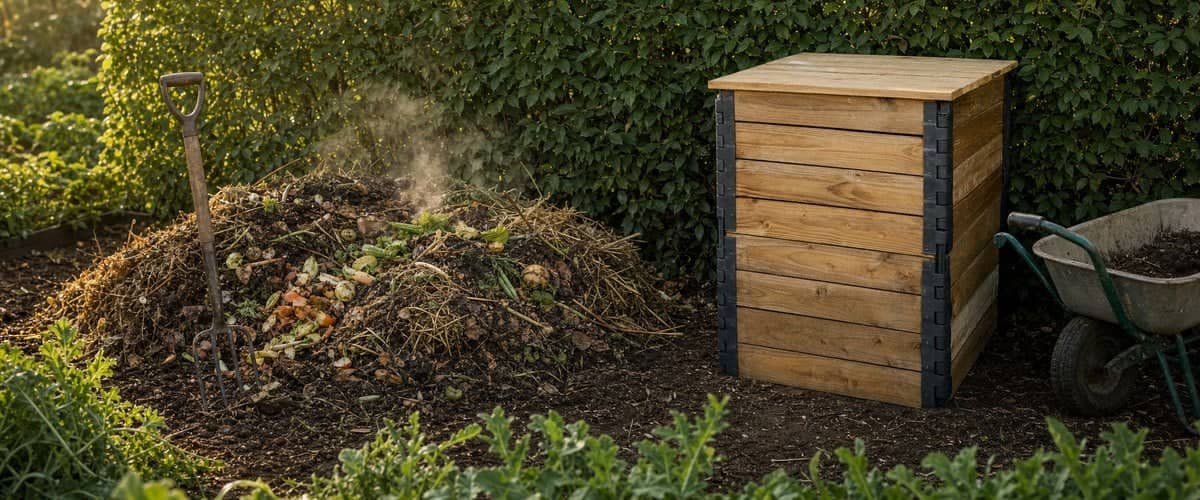
At the back of the yard, two schools of thought have always gone head to head: the good old compost pile, which our grandparents tended with a pitchfork, and the closed bin, which is more discreet and more modern. Both work, and the compost they produce is the same. What differs is the space they need, the time they take, and the peace of mind they offer.
Here are the pros and cons of each, a look at multi-bin systems, and our advice based on the size of your yard.
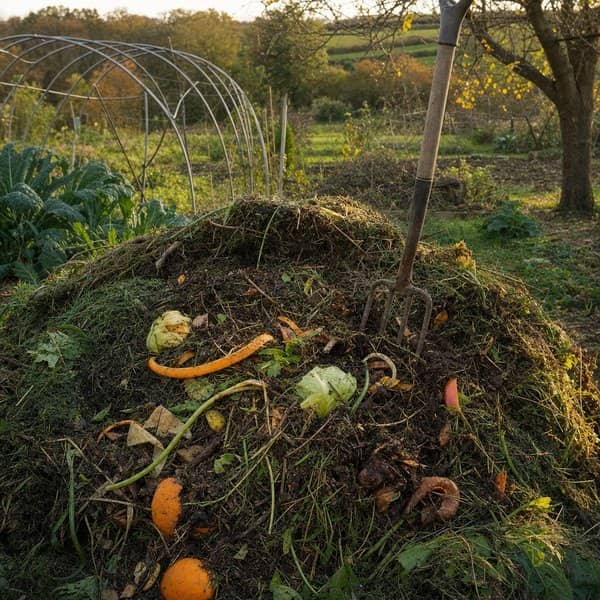
A compost pile is as simple as it gets: you heap your scraps and yard waste directly on the soil, in a corner of the yard. Aim for a height of roughly 20 in to 4.9 ft (50 cm to 1.5 m). Any lower, and the pile dries out and cools down too quickly. Any higher, and it compacts and lacks air in the center.
 It costs nothing and requires no assembly.
 It has no volume limit: ideal when your yard produces lots of grass clippings, leaves, and prunings.
 It is easy to turn with a pitchfork, since nothing gets in the way.
 It is slower: expect six months to a year before you get finished compost.
 It is exposed: rain washes it out, sun dries it up, and wind scatters it.
 It attracts animals: cats, dogs, and rodents love to dig through it, especially if you add food scraps.
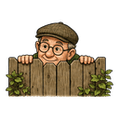 It is less discreet, which can be a problem in a small yard or near a fence you share with your neighbors.
To set one up, pick a spot in partial shade, sheltered from the wind, on ground that doesn't stay soggy, and away from the neighbors. An old tarp or a piece of cardboard laid over it in winter protects it from heavy rain without smothering it.
A bin, or silo, is a composter enclosed on all sides and fitted with a lid, made of wood or plastic. Like a pile, it sits directly on the soil. A bin can hold up to 264 gallons (1,000 liters) and, in theory, produces ready-to-use compost in about four to five months. In practice, we recommend planning on four to nine months, depending on the season and how well it is maintained.
 It retains heat and moisture, which speeds up decomposition.
 It keeps animals out, and food scraps stay out of sight.
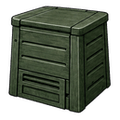 It is compact and clean, which makes it well suited to small yards.
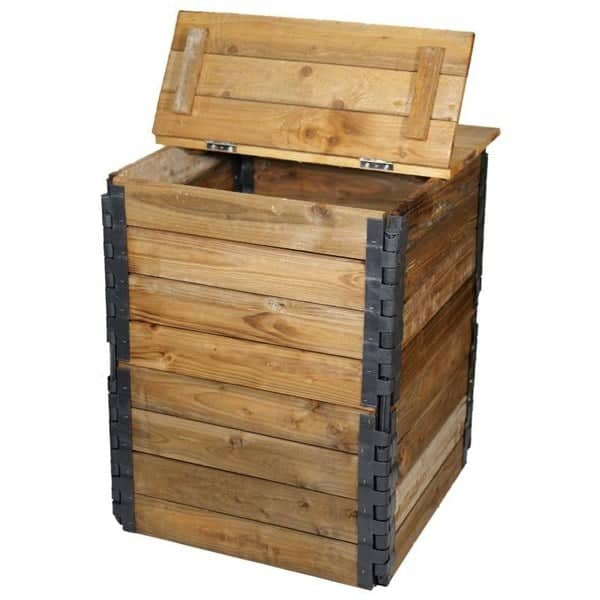
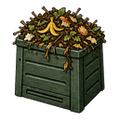 Its volume is limited: in spring, a single big mowing can fill it all at once.
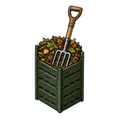 It is harder to mix than a pile: you stir the top layer, about 8 in (20 cm) deep, each time you add material, and a dedicated tool such as the Brass'Compost helps a lot.
 It has a cost, although many cities and counties offer them at a discount.
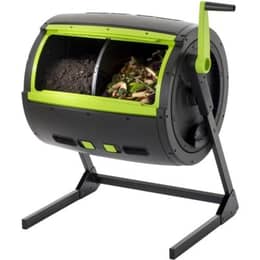
When choosing, look for a sturdy, well-made composter from a reputable manufacturer, built to last. Wood or plastic? Wood breathes and blends nicely into the yard; plastic is lightweight and maintenance-free. We cover choosing and caring for a wooden model in our guide Wooden composter, and the hand-turned drum in our guide Rotating composter.
Key takeawaysA pile is free and unlimited, but slow and exposed. A bin is faster, cleaner, and more discreet, but its volume is limited.
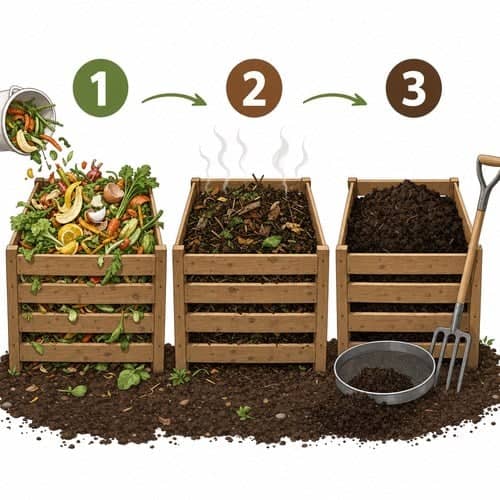 A single bin has one drawback: fresh scraps are constantly mixed with nearly finished compost, and you have to wait until everything has broken down before emptying it. The solution is to set up two bins side by side:
A third bin, or a simple crate, can hold a supply of dry material (dead leaves, wood chips), always within reach to balance what you add. In large yards, bins built from pallets work great; just make sure the wood hasn't been chemically treated.
If you have more than 264 gallons (1,000 liters) of material to compost, you're better off switching to two bins than hunting for a giant model. On the diagram: the bin being filled (1), the bin maturing (2), and the finished compost, ready to be screened (3).
Not all sources give the same figures, since everything depends on the season, the mix, and the care you put in. Here are some realistic estimates:
Finally, bins smaller than 35 cu ft (1 m³) are generally less efficient than large ones, but they work very well, just more slowly. So a small bin is still an excellent choice for a small yard.
An open pile attracts animals looking for food. If you compost your food scraps, bury them in the center and cover them with dry material, or go with a closed bin. Our guide to composter pests explains how to protect your compost effectively.
Compost should stay as moist as a wrung-out sponge. An uncovered pile can get waterlogged in winter and bone-dry in summer. A bin with a lid limits these extremes, but it may need watering during hot summers.
Well-balanced compost doesn't smell. Even so, place it away from the property line and your neighbors' windows, and behind a hedge if possible: it's nicer for everyone.
Willy's tipA pile doesn't have to be shapeless: four stakes and some wire mesh are enough to contain it. It takes up less space, looks neater, and is just as easy to turn: simply open one side.
 Small yard or patio, mostly food scraps: a bin of about 79–106 gallons (300–400 liters), or a rotating composter if the ground is concrete.
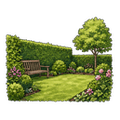 Medium-sized yard, with lawn and a few hedges: a bin of 106–159 gallons (400–600 liters), along with a supply of dry material.
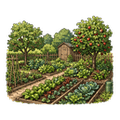 Large yard, vegetable garden, orchard: a two- or three-bin system, or one bin for food scraps and a pile for large volumes of yard waste.
These guidelines, similar to those many local governments provide, are covered in detail in our guide What size composter?. A wooden bin such as our Compostys wooden composter is a great way to get started, and there's nothing stopping you from adding a second one later. If you're still torn between backyard compost and worms, our guide Worm composter or traditional composter will help.
A pile is free, unlimited, and easy to turn, but it is slower, exposed to the weather, and attracts animals. A bin is faster, cleaner, and more discreet, at the cost of limited volume. For a small yard, one bin is enough. For a large one, two or three bins, or a bin paired with a pile, let you always have one batch of compost in progress and another maturing. Either way, keep a supply of dry material nearby.
Scan the code or visit mouttafarm.com/guide: all our how-to guides, with links to the products mentioned.



 France
 Belgium
 Switzerland
 Germany
 Austria
 United Kingdom
 Italy
 Spain
 Holland
 Portugal
 Ireland
 Sweden
 Finland
 Denmark
 Greece
 Poland
 Rumania
 Czech Republic
