












Best Seller
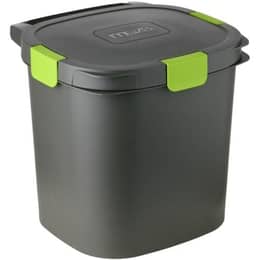
Bokashi Composter Confort
3.7-gallon (14-liter) capacity, sold individually or as a set of 2
$45.59 €40.83
Fast and odor-free, composting worms eat your food scraps and turn them into fertilizer for your plants.

From 2 to 4 trays, with an optional planter.

Up to 18 growing areas around a central worm composter.

Terracotta, with a flower pot.

From 2 to 4 trays, with a lower shelf.

Trays you add over time for easy vermicompost harvesting.

Turn your planters and flower beds into a worm composter: WORMacotta, In-Ground.
 Practical guide

From kitchen to garden, composting becomes simple, fast, and effective for everyone.
 Practical guide
 Practical guide
Live animals (worms and bait) and products to feed and care for pets and livestock.

Eisenia composting worms for your worm composter or compost bin.

Ultra-fresh worms: red worms, Dendros, and Canadian nightcrawlers from 3.5 oz (100 g) to 2.2 lb (1 kg).

Natural solutions dedicated to the well-being of horses, ponies, and donkeys.

Optimize the health and performance of your farm.

Mealworms: natural, nutritious supplements.
Beautify your home with our decorative pieces and care for your house in a natural, sustainable way.
Garden the eco-friendly way, in harmony with nature, for healthy, long-lasting plants.
EM-based products designed to enrich soil, protect plants, support animal health, and make everyday well-being and home care easier.

Contains a blend of 80 families of beneficial microorganisms.

Revitalize, purify, and improve water quality in all your applications.

Stimulate soil microbial activity and plant growth.

Clean and care for your surroundings naturally.

For the well-being and health of pets, livestock, and horses.

Enrich your body care and dietary routines with essential enzymes.
 Practical guidePractical guide

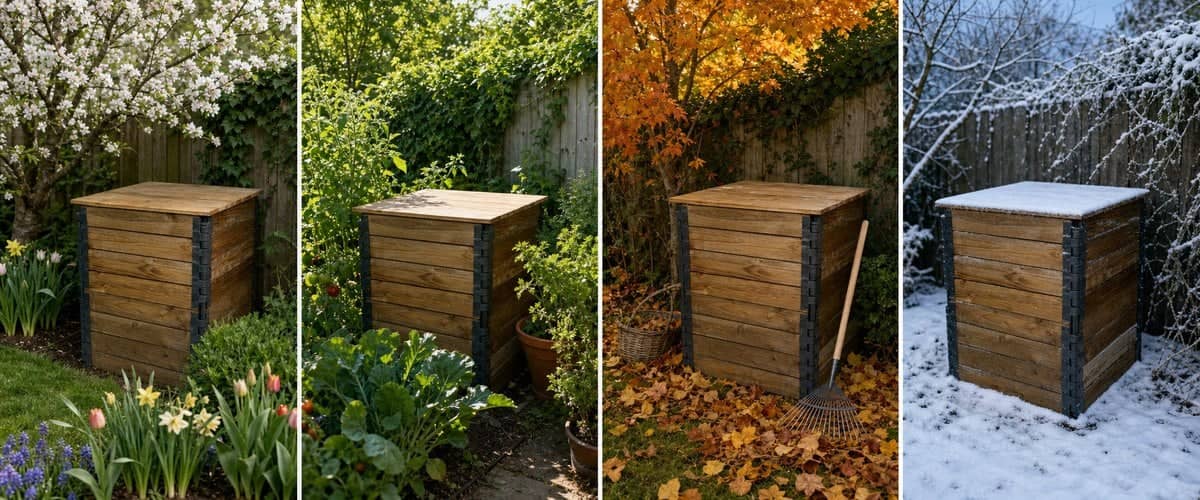
A compost bin doesn't work at the same pace in July as it does in January. When it's warm, the microorganisms work quickly and you can practically watch the compost progress. When it's cold, everything slows down, sometimes to the point where it seems to stop altogether. That's nothing to worry about: you just need to adjust a few habits for each season.
Here's what to do, and what not to do, throughout the year to keep your compost active twelve months a year.
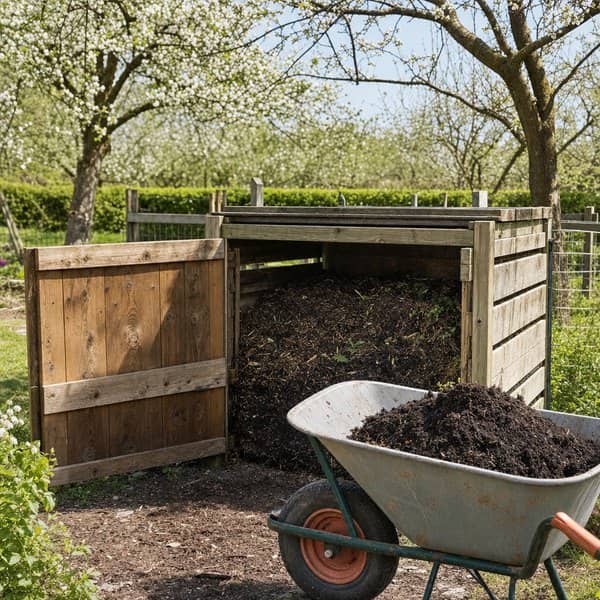
As the milder weather returns, activity in the compost bin picks up again. It's the busiest season and, along with fall, one of the best times to start a new compost bin.
 Get the compost going again with a thorough mixing. It puts air back into material packed down over the winter and blends in the scraps that have piled up on the surface.
 Check the moisture with the squeeze test. After a rainy winter, compost is often too wet, so add dry browns.
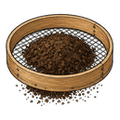 Harvest the finished compost from the bottom of the bin to make room. Spring is the right time to spread it between the rows in the vegetable garden before mulching, or on the lawn and around perennials.
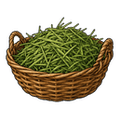 Be careful with the first grass clippings, which come in large amounts. Never add them in a thick layer, and always mix them with dry material.
If you're starting your first compost bin, our guide Starting your compost bin step by step will walk you through it.
Heat speeds up decomposition, so this is the season when compost progresses fastest. But there's a downside: drying out. Dry compost stops dead, because the microorganisms need water to live.
 Do the squeeze test every week and water if no droplets appear, ideally with rainwater. Mix as you go to spread the water evenly.
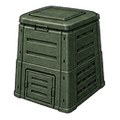 Keep the lid closed and, if possible, place the compost bin in partial shade rather than full sun.
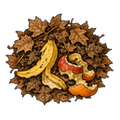 Cover sweet fruit (melon, peaches, plums) with brown material so you don't attract fruit flies.
 Watch out for a lack of browns. In summer, we add lots of greens (grass clippings, fruit peels) and little dry material. Dip into your stash of leaves or wood chips.
Willy's tipKeep a watering can full of rainwater next to the compost bin, ready to use, and it becomes second nature: every time you empty your kitchen compost pail, take a quick look, do a quick squeeze test, and add a little water if needed.
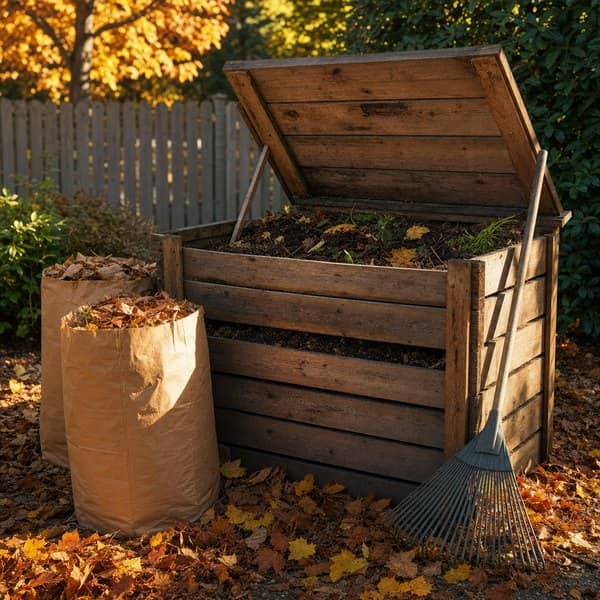
Fall is the season for gathering large amounts of brown material. The fallen leaves that come down in abundance are a valuable resource: they will supply dry material all year round.
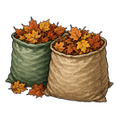 Build up your stash. Store several bags of fallen leaves somewhere dry, or pile them up in a corner of the yard. If you run the lawn mower over them first, they take up less space and break down faster.
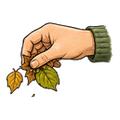 Don't put them all in at once. Add them to the compost bin gradually, in step with your food scraps.
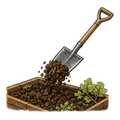 Spread finished compost on the surface of the vegetable garden and around shrubs, lightly raking it in. Fall and late winter are both good times for this.
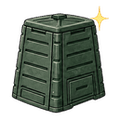 It's also a good season to start a compost bin, with all that dry material on hand.
If you have lots of leaves, also consider leaf mold. It's a different product from compost and highly prized for starting seeds. We explain it in our guide Leaf mold.
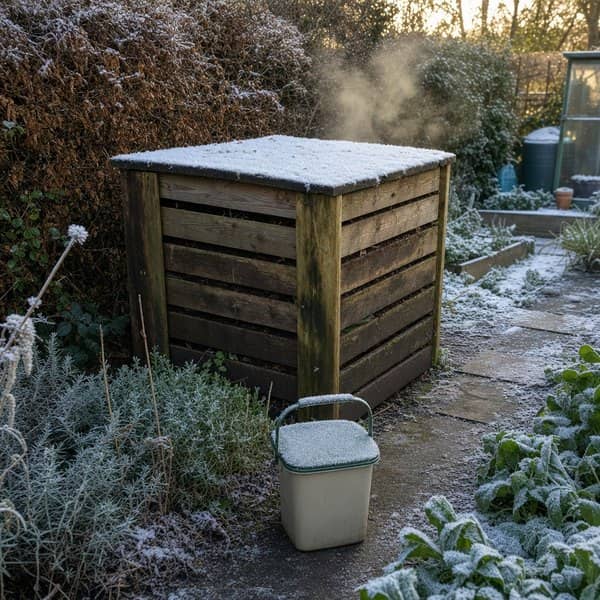
In winter, activity slows down considerably. The cold holds back the microorganisms, and a household compost bin, which doesn't heat up much even in normal conditions, loses its warmth even more easily. Does that mean you should stop? No.
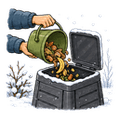 Keep adding your food scraps, mixing them with brown material. Stick to a mix of roughly half greens and half browns, with a little more brown in winter, since less moisture evaporates.
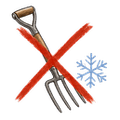 Turn as little as possible. Every turn lets heat escape and slows decomposition even further. A light mix on the surface is enough.
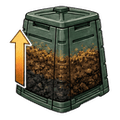 Don't worry if the level rises. Scraps build up over the winter and will be broken down quickly once warm weather returns.
Opinions differ on this point, and some guides recommend the opposite, which is to keep aerating in winter. Our take: in a bin, a little surface mixing when you add material is enough to prevent compaction, without trying to turn the whole pile.
Did you know?In a well-filled bin, the core of the compost often stays warmer than the outside air, even in winter, because decomposition gives off a little heat. That's why we avoid turning everything over: doing so would scatter this precious reserve of warmth.
Winter's two enemies are cold and excess water. A few simple precautions help:
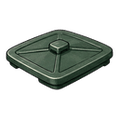 A lid for bins, or thick cardboard or a tarp for an open pile. Compost soaked by winter rain gets compacted, lacks air, and smells bad in spring.
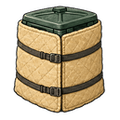 Insulation for exposed piles and bins. Surround the sides with straw bales or bags of dry leaves.
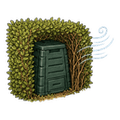 A spot sheltered from the wind, ideally somewhere that catches the low winter sun.
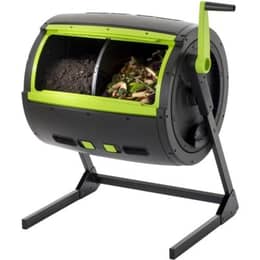
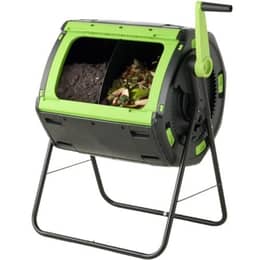
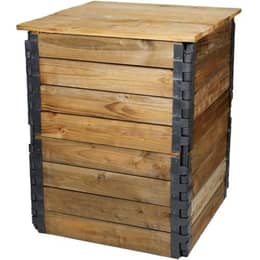
A wooden compost bin such as the Compostys Wooden Compost Bin holds heat a little better than a thin plastic bin, because wood is a natural insulator. Tumbler composters, on the other hand, are more like "summer workers." They are poorly insulated and raised off the ground, so they don't heat up well in cold weather, and compost breaks down very slowly in them during the winter.
 March to May: a thorough mix to restart, harvesting finished compost, spreading it on the vegetable garden and lawn, starting a new compost bin.
 June to August: weekly squeeze test, watering if needed, lid closed, sweet fruit covered with browns, monthly mixing.
 September to November: stockpiling fallen leaves, fall spreading, starting a new bin if you like, last thorough mix before the cold.
 December to February: steady additions with a little more brown, no turning, lid and insulation, patience.
For mixing during the warmer months, an aerator such as the Brass'Compost saves you from emptying the bin. We explain how often to mix depending on your equipment in our guide Moisture and aeration.
Your worm composter is far more sensitive to extreme temperatures than a backyard compost bin, because worms can't survive freezing. See our guide How to protect your worm bin from cold and heat.
In spring, restart, harvest, and spread. In summer, keep an eye on moisture and water as needed. In fall, stock up on fallen leaves for the whole year. In winter, keep adding your scraps with a little more brown, cover, insulate, and avoid turning. Compost slows down in the cold, but it never really stops. It bounces back with renewed vigor as soon as the first warm days arrive.
Scan the code or visit mouttafarm.com/guide: all our how-to guides, with links to the products mentioned.



 France
 Belgium
 Switzerland
 Germany
 Austria
 United Kingdom
 Italy
 Spain
 Holland
 Portugal
 Ireland
 Sweden
 Finland
 Denmark
 Greece
 Poland
 Rumania
 Czech Republic
