












Best Seller
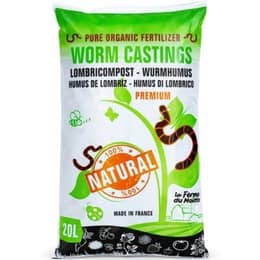
Vermicompost, Worm Castings | 13L Bag
Produced by earthworms digesting organic matter.
$10.05 €9.00
Fast and odor-free, composting worms eat your food scraps and turn them into fertilizer for your plants.

From 2 to 4 trays, with an optional planter.

Up to 18 growing areas around a central worm composter.

Terracotta, with a flower pot.

From 2 to 4 trays, with a lower shelf.

Trays you add over time for easy vermicompost harvesting.

Turn your planters and flower beds into a worm composter: WORMacotta, In-Ground.
 Practical guide

From kitchen to garden, composting becomes simple, fast, and effective for everyone.
 Practical guide
 Practical guide
Live animals (worms and bait) and products to feed and care for pets and livestock.

Eisenia composting worms for your worm composter or compost bin.

Ultra-fresh worms: red worms, Dendros, and Canadian nightcrawlers from 3.5 oz (100 g) to 2.2 lb (1 kg).

Natural solutions dedicated to the well-being of horses, ponies, and donkeys.

Optimize the health and performance of your farm.

Mealworms: natural, nutritious supplements.
Beautify your home with our decorative pieces and care for your house in a natural, sustainable way.
Garden the eco-friendly way, in harmony with nature, for healthy, long-lasting plants.
EM-based products designed to enrich soil, protect plants, support animal health, and make everyday well-being and home care easier.

Contains a blend of 80 families of beneficial microorganisms.

Revitalize, purify, and improve water quality in all your applications.

Stimulate soil microbial activity and plant growth.

Clean and care for your surroundings naturally.

For the well-being and health of pets, livestock, and horses.

Enrich your body care and dietary routines with essential enzymes.
 Practical guidePractical guide

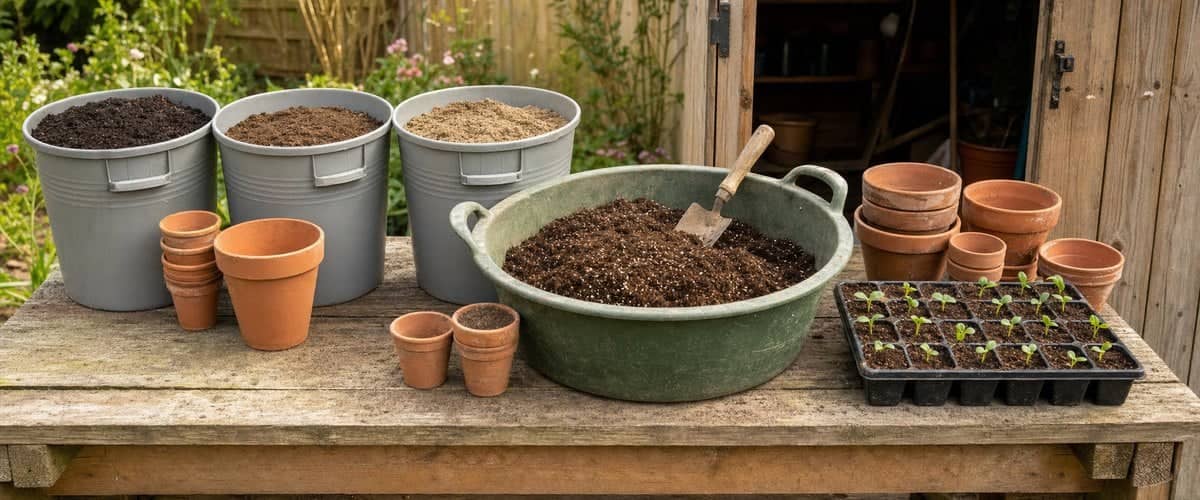
Why buy bags of potting mix when you have a composter out in the backyard? With well-aged compost, a little soil, and a little sand, you can make your own mixes for seed starting, repotting, and planters. It saves money, it means you don't have to buy peat-based mixes, and you know exactly what goes into your pots.
There are two rules to follow, though: use compost that is truly mature, and never use it on its own. Here's how to do it, with simple recipes for each use.
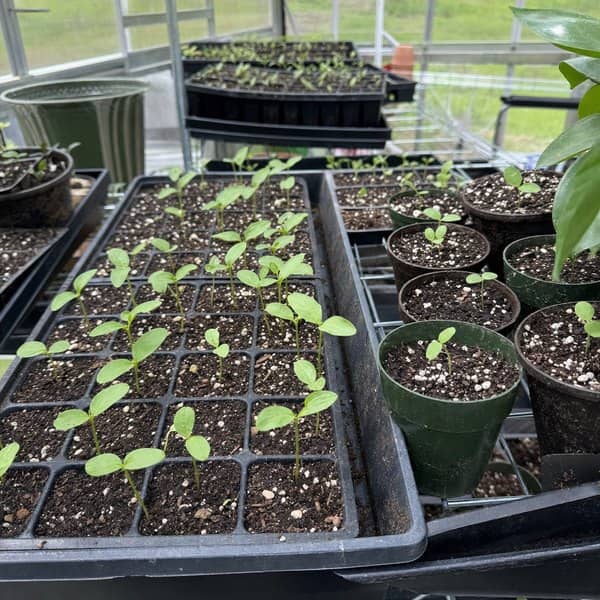
People often mix up the two, but they're not the same thing. Compost is a soil amendment: a rich, concentrated material that feeds the soil and improves its structure. Potting mix is a growing medium: a balanced blend in which a plant can take root and find water, air, and moderate nutrition. A good homemade potting mix contains compost, but it isn't just compost.
On this point, the rule is clear: avoid sowing or planting directly in compost. A few very heavy feeders, such as tomatoes or pumpkins, can handle it, but most plants can't. Too rich and still active, pure compost can hinder germination and root development in young plants.
Not all compost is equal when it comes to potting mix. For use as a growing medium, we recommend compost that is at least 18 months old. That's considerably longer than for simply adding it to the vegetable garden: by this stage, the compost is stable and fully decomposed.
If your compost is younger, use it in the garden and set part of your harvest aside, covered, for the following season. Before using it, sift it: fine compost is easier to work with in pots and blends better. We explain how in our guide Harvesting and sifting your compost.
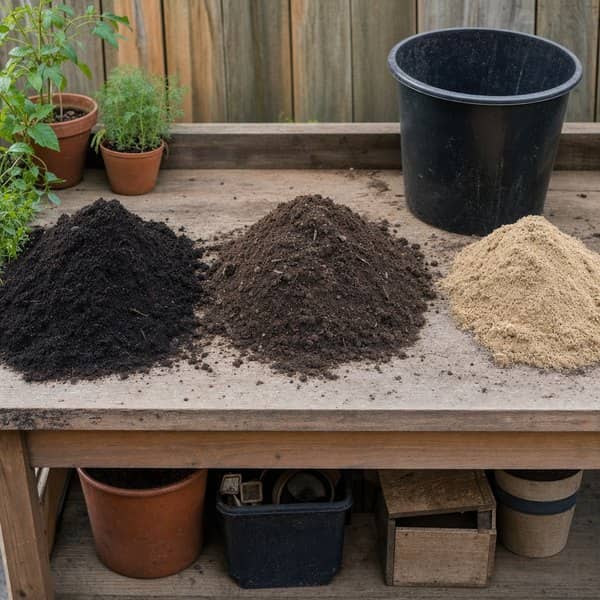
This is the basic recipe and the one most commonly recommended: one-third compost, one-third soil, one-third sand, measured by volume.
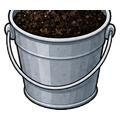 Compost provides organic matter and nutrients;
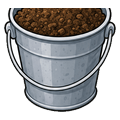 garden soil, taken from a healthy spot and cleared of stones and roots, gives the mix body and holds on to nutrients;
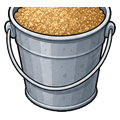 sand lightens the mix and ensures good drainage, so water doesn't pool at the bottom of the pot.
In practice, use a bucket as your unit of measurement: one bucket of sifted compost, one bucket of soil, one bucket of sand. Then mix thoroughly on a tarp or in a wheelbarrow. This base works for most uses, and you can adjust it to suit your plants.
Willy's tipIf your garden soil is already light and sandy, there's no need to add sand: a mix of two-thirds soil to one-third compost works very well. On the other hand, if your soil is heavy and sticky, keep the full third of sand, or even add a little more.
The proportions below are based on the recommendations of several trusted gardening guides. We've kept the ranges they agree on.
Seeds don't need nutrients to germinate: they carry their own reserves. A light, low-nutrient mix suits them better. Use roughly one-quarter well-aged, finely sifted compost to three-quarters good, fine soil, lightened with sand if needed. Well-decomposed leaf mold also makes an excellent seed-starting medium (see below).
The rule of thirds works well. For plants that prefer a lighter soil, you can go down to one-quarter compost to three-quarters soil.
For a new planter of flowers or vegetables, the rule of thirds is still a good base. The guides we consulted allow 30 to 40% compost in a new planter: don't go any higher.
There's no need to throw everything out every year. Remove the old roots, loosen the old soil, and add about 20% compost, without going over that amount. Your planter will be ready for another season.
If you also have a worm bin, keep in mind that vermicompost is much more concentrated than garden compost: it's used in different amounts, as we explain in our guide Harvesting vermicompost and worm tea.
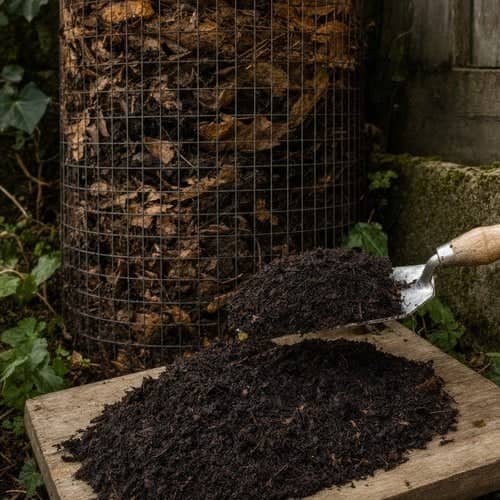 Fallen leaves composted separately produce something different from compost: leaf mold. Lower in nutrients, very light, and very fine, it makes an ideal medium for seed starting. Most leaves take about two years to break down, and leaf mold more than two years old can be used as a seed-starting mix. When it's younger, it makes a good mulch. Oak, beech, and hornbeam leaves give the best results. We explain the method in detail in our guide Leaf mold: what to do with fallen leaves?
Before starting all your spring seeds, do a trial run. Fill one or two small pots with your homemade potting mix, sow a few cress seeds, water, and keep them somewhere warm. If they germinate well and evenly within about a week, your mix is ready. If germination is poor or patchy, your compost probably isn't mature enough, or there's too much of it in the mix: add soil and repeat the test. You'll find a more precise version of this test in our guide How can you tell if your compost is mature?
Did you know?Garden compost rarely gets hot enough to kill all weed seeds. For delicate seedlings, you can bake slightly moist compost in the oven for 30 minutes at about 176 °F (80 °C). This step is optional and best reserved for small batches intended for seed starting.
Store your homemade potting mix out of the rain, in a bin or in bags that aren't airtight, so it stays slightly moist without rotting. To move compost, soil, and sand to your potting area, our 14.5-gallon (55-liter) compost collection cart saves you plenty of trips back and forth. And if you garden in the city, on a balcony or patio, our book "Composter en ville" will help you take things further.
Key takeawaysNever use pure compost in a pot. For homemade potting mix, use well-aged, sifted compost, ideally 18 months old or more, and follow the rule of thirds: compost, soil, sand. For seed starting, one-quarter compost is enough.
Making your own potting mix is simple: well-aged, sifted compost, garden soil, and sand, mixed in equal parts according to the rule of thirds. Use less compost for seed starting, a little more for planters with hungry plants, and limit it to about 20% when refreshing an old planter. Leaf mold more than two years old is the perfect addition to your seed-starting toolkit. Do a quick cress test before you get started, and both your seedlings and your potted plants will get the full benefit of your compost.
Scan the code or visit mouttafarm.com/guide: all our how-to guides, with links to the products mentioned.



 France
 Belgium
 Switzerland
 Germany
 Austria
 United Kingdom
 Italy
 Spain
 Holland
 Portugal
 Ireland
 Sweden
 Finland
 Denmark
 Greece
 Poland
 Rumania
 Czech Republic
