Turn your organic food scraps into natural compost.
The Urbalive worm composter uses composting worms to break down organic food scraps from your kitchen.
Unique, modern, and stylish, the Urbalive is just as much at home in your kitchen as it is in schools or the workplace. It turns your food scraps into useful resources and helps protect the ecosystem.
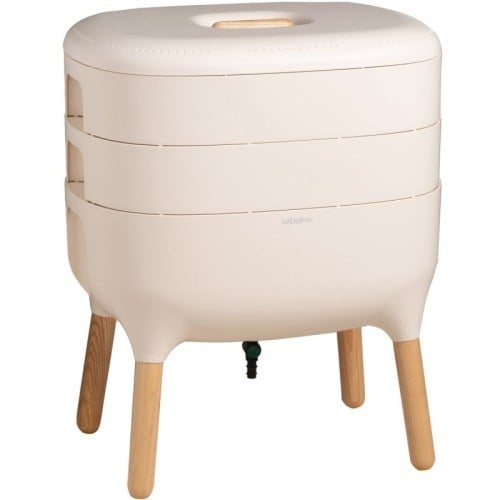
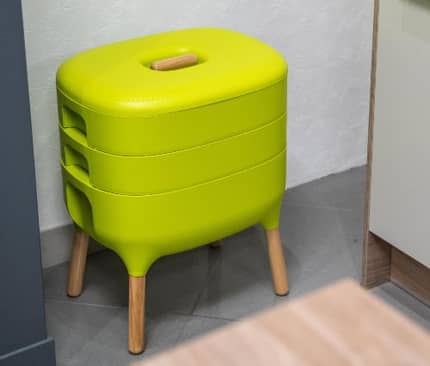
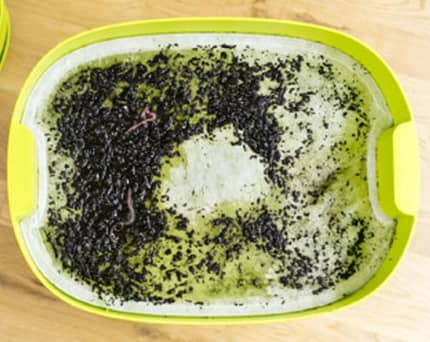
Its contemporary design features 2 or 3 composting trays, where the worms turn food scraps into vermicompost. The process also produces worm tea, which collects in a bottom reservoir and drains through a built-in spigot.
The resulting vermicompost is naturally rich in enzymes and growth hormones. It improves soil fertility and gives your garden, houseplants, or vegetable garden a real boost.
Its modern design comes from renowned Czech designer Jiří Pelcl, an international leader in contemporary design.
The Urbalive won the prestigious Red Dot Design Award, often called the Oscars of design.
A creation that blends aesthetics, innovation, and sustainability, right down to the smallest detail.
Comes complete with:
- 1 lid with wooden handle,
2 or 3 trays,
1 leachate tray with spigot, - 1 anti-drowning filter for the worms,
4 wooden legs,
1 scoop, - 1 vermicomposting guide + assembly instructions in English.
Included: the complete guide to vermicomposting plus a detailed 20-page user manual (8.3 in x 8.3 in [21 cm x 21 cm], in English) to walk you step by step through using and caring for your worm composter.
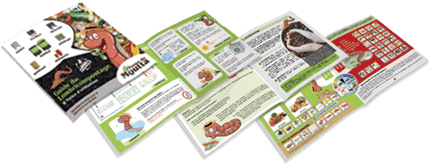
Benefits
Vermicompost with class, naturally and elegantly:
- Contemporary design that fits beautifully into any home.
- Large-capacity 3.7-gallon (14-liter) trays for efficient everyday composting.
- Thick, sturdy plastic built to last.
- Raised design makes it easy to set a bottle under the spigot.
- Replaceable filter in the leachate tray keeps composting worms from falling into the worm tea, so you collect clean liquid with no drowned worms.
How it works & how to use it:
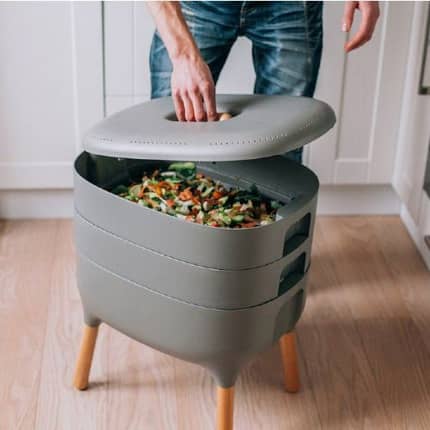
As the bottom trays fill up, you add a new tray on top and the stack grows by one level. The worms gradually move upward, drawn by the fresh food scraps, to feed on new organic matter. The vermicompost and worm tea are harvested from the lower levels of the worm composter.

































 USA. Calculate your shipping costs in your cart. We ship to 192 countries.






 Belgium
 Switzerland
 Germany
 United Kingdom
 Italy
 Spain
 Holland
 Portugal
 Ireland
 Sweden
 Finland
 Denmark
 Greece
 Poland
 Rumania
 Czech Republic
