











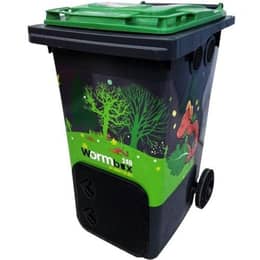
WORMbox 240 Community Worm Composter
880 lb (400 kg) of organic waste processed per year
$458.72 €408.33
Fast and odor-free, composting worms eat your food scraps and turn them into fertilizer for your plants.

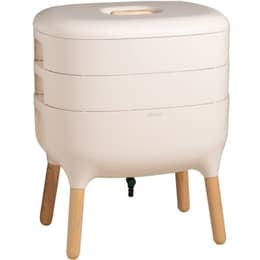
From 2 to 4 trays, with an optional planter.

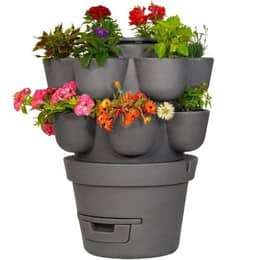
Up to 18 growing areas around a central worm composter.

Terracotta, with a flower pot.

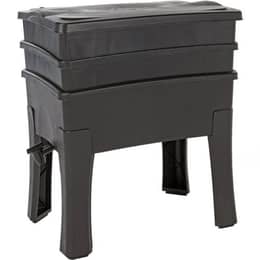
From 2 to 4 trays, with a lower shelf.

Trays you add over time for easy vermicompost harvesting.

Turn your planters and flower beds into a worm composter: WORMacotta, In-Ground.
From kitchen to garden, composting becomes simple, fast, and effective for everyone.
Live animals (worms and bait) and products to feed and care for pets and livestock.

Eisenia composting worms for your worm composter or compost bin.

Ultra-fresh worms: red worms, Dendros, and Canadian nightcrawlers from 3.5 oz (100 g) to 2.2 lb (1 kg).

Natural solutions dedicated to the well-being of horses, ponies, and donkeys.

Optimize the health and performance of your farm.

Mealworms: natural, nutritious supplements.
Beautify your home with our decorative pieces and care for your house in a natural, sustainable way.
Garden the eco-friendly way, in harmony with nature, for healthy, long-lasting plants.
EM-based products designed to enrich soil, protect plants, support animal health, and make everyday well-being and home care easier.

Contains a blend of 80 families of beneficial microorganisms.

Revitalize, purify, and improve water quality in all your applications.

Stimulate soil microbial activity and plant growth.

Clean and care for your surroundings naturally.

For the well-being and health of pets, livestock, and horses.

Enrich your body care and dietary routines with essential enzymes.
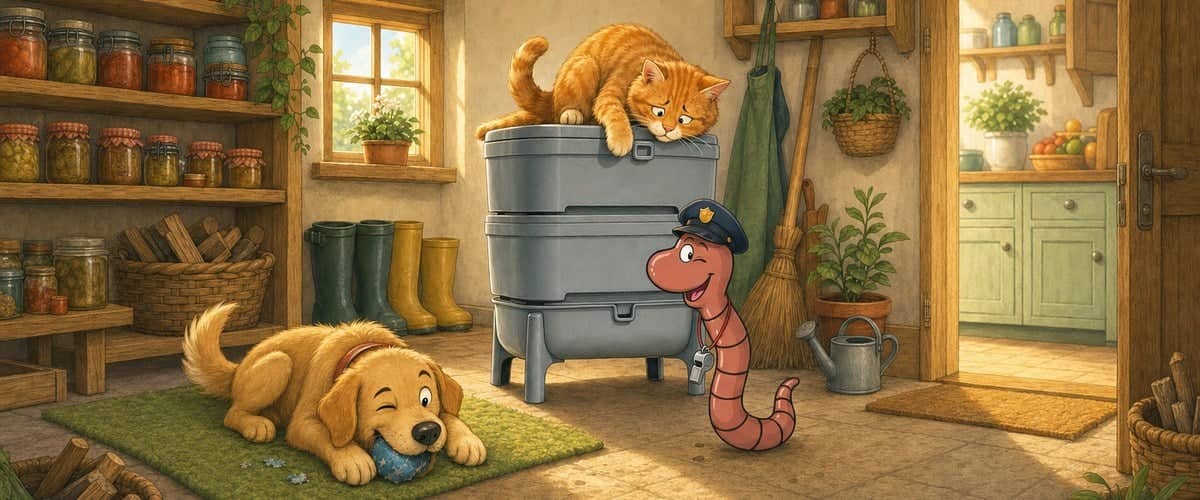
Having a cat or a dog and a worm composter at home is not a problem at all: they get along just fine, with one precaution. This guide covers everyday life with your pets — to find out what you can and can't put in your worm composter (used cat litter, pet waste...), head over to our guide What do earthworms eat?
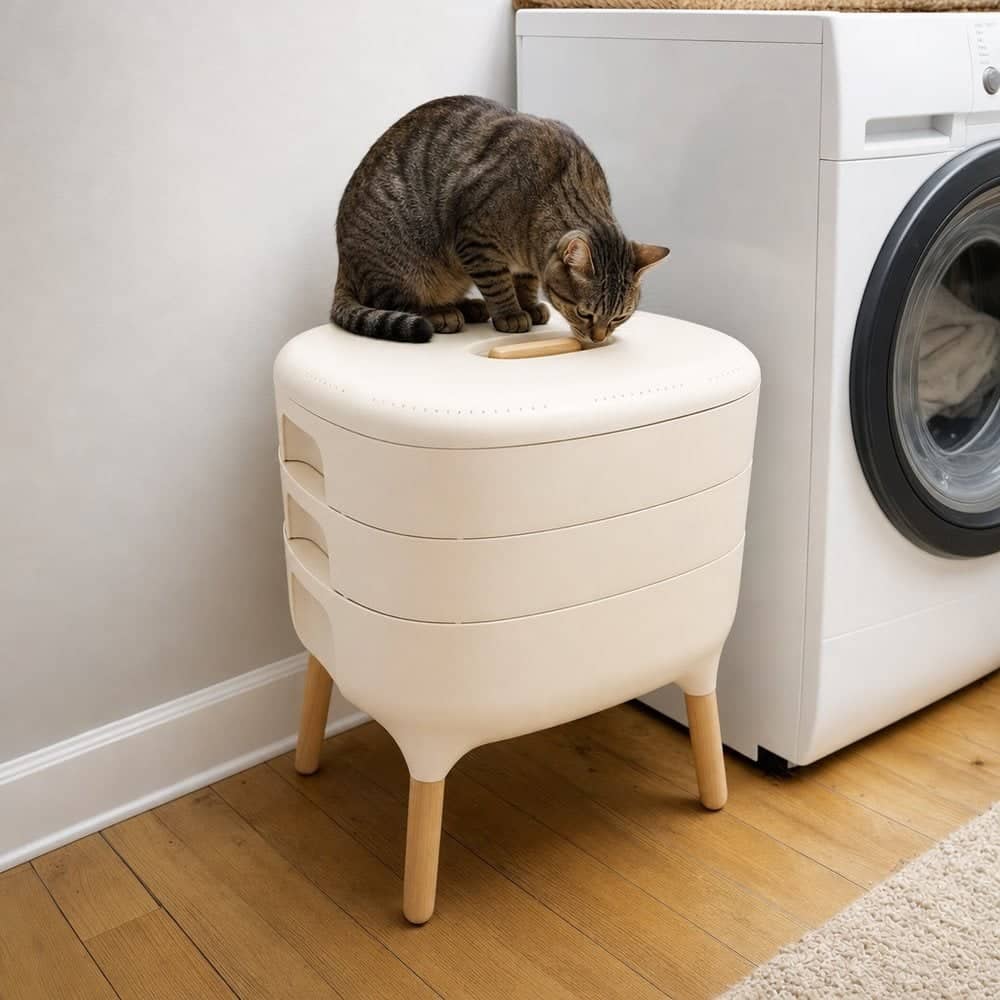 If you have a cat, one rule comes before all others: never let it use your worm composter as a litter box. Besides the smell of urine, which would quickly become hard to live with, cat waste poses a real health risk — we explain why in our guide on what worms eat, since the temperature inside a home worm bin isn't high enough to neutralize this risk.
The solution is simple: choose a spot your cat just can't get to, or a model whose lid always stays securely clipped shut. We go over the different possible locations in our guide Where to put your worm composter
Willy's tipA curious cat soon loses interest in a lid that doesn't open easily. A securely closed worm composter, placed in a room your cat has limited access to (laundry room, basement, garage...), is enough in the vast majority of cases to rule out any risk.
Also think about the food scrap container in your kitchen, especially if you follow our compost pail tip for a worm composter set up far from the kitchen: it's best to keep it closed or out of reach, so a hungry cat doesn't help itself to your peels before they even make it to your worms.
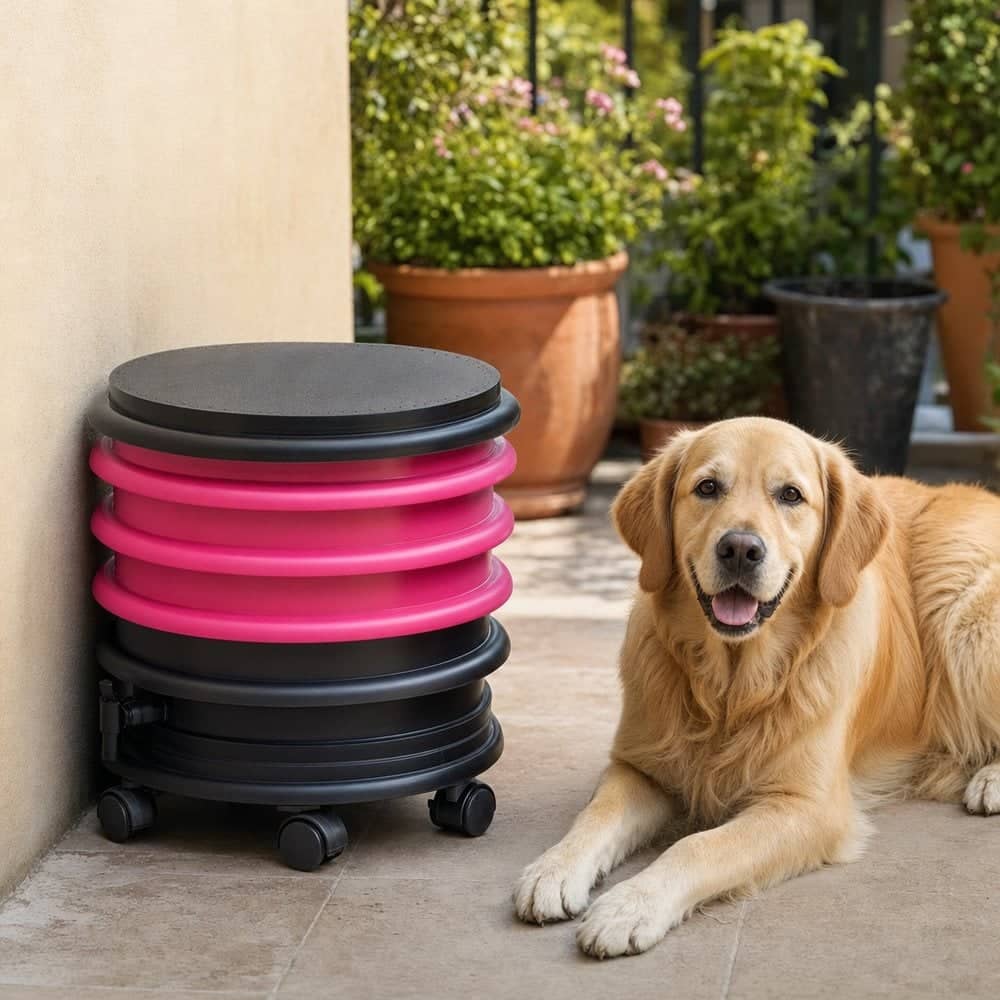 The risk is much lower: dogs don't have the same instinct as cats to use a container as a litter box. If yours is the curious, nosy type, the same precaution still applies, just to be safe: keep the worm composter out of reach or in a closed room, so your dog doesn't dig through the trays or snack straight from them. Besides, a well-balanced worm bin has nothing appealing about it compared with an ordinary trash can: at most a faint forest-floor smell, far less tempting for an inquisitive dog.
And rest assured: composting worms themselves are perfectly harmless if your pet happens to eat one out of curiosity. They're even used commercially as a protein supplement in some pet foods.
Once harvested, vermicompost is a completely natural fertilizer with no chemicals at all — nothing like some garden fertilizers or treatments that need to be kept away from your pets. You can spread it in your garden or window boxes without any particular worry about a cat or dog wandering through. The same goes for worm tea, once diluted for watering: it's a natural product with no chemical additives that poses no particular danger to your pets. We explain how to harvest and use these two fertilizers in our guide Harvesting vermicompost and worm tea
Worm composters and pets get along very well, with just one real precaution: never let your cat use it as a litter box, for your own comfort and for everyone's safety. A well-chosen location and a lid that closes properly are enough, in the vast majority of cases, to rule out any risk — for your pets and your worms alike.

 France
 Belgium
 Switzerland
 Germany
 United Kingdom
 Italy
 Spain
 Holland
 Portugal
 Ireland
 Sweden
 Finland
 Denmark
 Greece
 Poland
 Rumania
 Czech Republic
