The WORMbox 240 worm composter, 63 gallons (240 liters), is designed for apartment buildings and shared housing, the area outside residential buildings, restaurants, cafeterias, and more. It can process around 880 lb (400 kg) of organic waste per year, enough to handle and recycle the waste of 5 to 10 households.
Made in France, delivery in 5–10 days.
Need more capacity? Set up several WORMbox 240 units side by side!
The WORMbox 240 is the result of many years of research and testing, especially on its silo system. Composting worms only work in the top 12–16 in (30–40 cm). If you put them in a container that's too large, they won't go down to the bottom or out to the sides. With the silo, it's as if the worms had a working area of several square yards (several m²): they work at the top, along the sides, and at the bottom.
The silo's other advantage is excellent aeration. The oxygen flow is perfectly controlled thanks to four ventilation grids. Food scraps don't stick to the walls, so there's no need to stir the compost!
The worms "push" the vermicompost (the fertilizer) toward the sides, and it naturally falls to the bottom. You can then collect it easily through the front access hatch.
The silo sits on a leachate tray fitted with a sturdy welded aluminum mesh filter. The worms can't crawl down and drown in the tray. Simply drain the worm tea using the spigot.
Comes complete with:
- 4.4 lb (2 kg) of composting worms (about 4,000 worms),
- 1 galvanized steel silo,
- 1 aluminum mesh filter,
- 1 leachate tray with spigot,
- 1 aluminum stand,
- 1 worm tea collector,
- 1 sieve for sifting the worm castings,
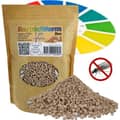
- 4.4 lb (2 kg) of RegulaWorm,
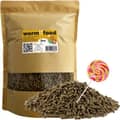
- 4.4 lb (2 kg) of WormFood,
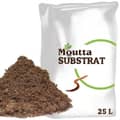
2.6 gallons (10 liters) of starter bedding, - 1 user guide + assembly instructions.
The leachate tray sits on an aluminum stand. Everything comes apart and cleans up easily, and the container requires no drilling or fasteners, so it won't warp.
The lid shows all the key information about what the worms can eat.
We recommend placing the WORMbox 240 out of direct sunlight. Avoid south-facing spots. The worms work best at temperatures between 59 and 77 °F (15–25 °C).
Advantages
Large-scale vermicomposting:
- Practical and attractive.
- Highly efficient, thanks to its silo system and aeration.
- Handles large amounts of waste, and several units can be placed side by side.
- Easy to move and easy to maintain.
- All the accessories you need to get started and use it with complete peace of mind.
How it works:
Food scraps go in at the top, and the vermicompost is harvested from the bottom in a continuous flow. Just open the front hatch and gently collect the compost that has naturally fallen to the bottom of the container. The very first harvest takes place after 6 months.
































 Belgium
 Switzerland
 Germany
 United Kingdom
 Italy
 Spain
 Holland
 Portugal
 Ireland
 Sweden
 Finland
 Denmark
 Greece
 Poland
 Rumania
 Czech Republic
