

































 GardeningNew in
WORMgarden: a wormery at the heart of a vertical vegetable garden
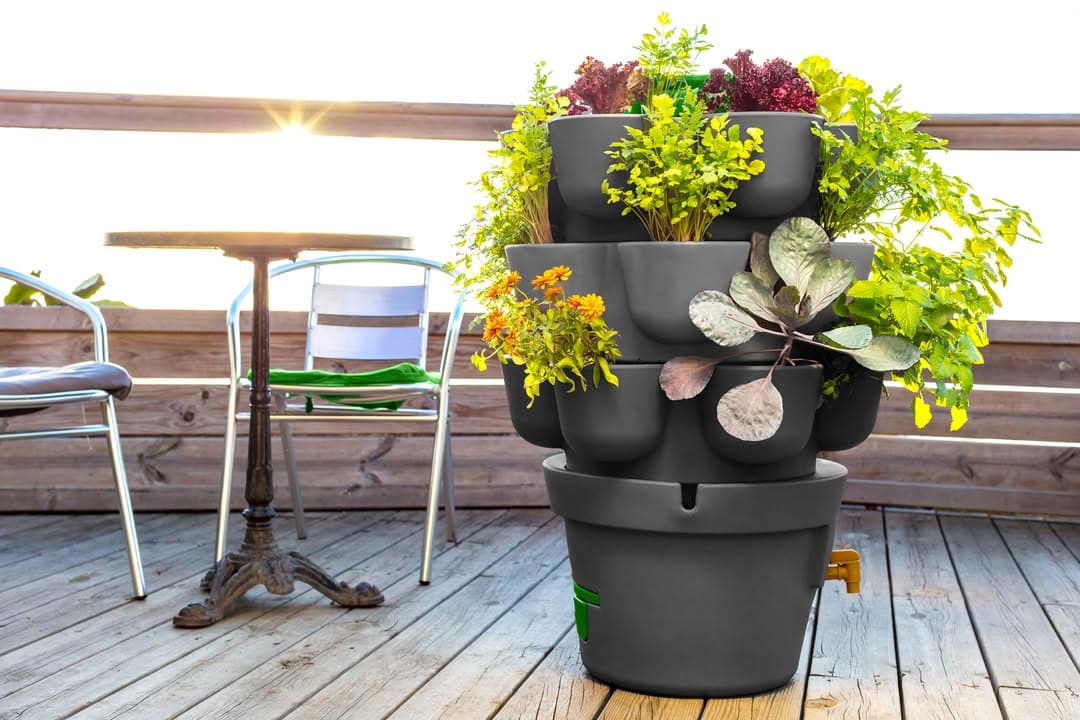
What if your kitchen waste fed your plants directly? The WORMgarden (launched under the name JardiComposteur) combines a wormery with planters, based on the keyhole garden principle.

- The WORMgarden combines a central wormery with planters all around it.
- It is inspired by the keyhole garden.
- It is made in France, with 1 to 3 planters of 6 pots each.
How can you combine a wormery and a planter? With the WORMgarden, a vertical vegetable garden made in France. We launched it under the name JardiComposteur; today it is called WORMgarden.
The keyhole garden principle
The keyhole garden is a growing technique that comes from southern Africa. A composting point is set up in the centre of a bed, and the plants grow all around it. The waste feeds the soil continuously, right next to the roots.
It is a principle much appreciated in permaculture: the growing is productive, and you recycle your waste on the spot.
How does the WORMgarden work?
In the centre, a large composting area houses your compost worms. You lift the lid, add your peelings, and the worms take care of the rest. They turn the waste into a rich compost that fertilises the soil in the planters.
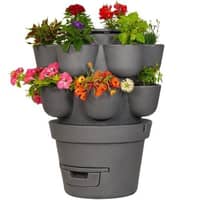
Around it, each level has 6 growing pots, with holes to hold plant supports. You can install 1 to 3 planters, depending on the space you have. And thanks to its tap, the watering water that drains through is collected.
Who is it for?
The WORMgarden is ideal on a balcony or terrace: a single item to reduce your waste and grow herbs, flowers or small vegetables. To compare it with the other models that combine worms and plants, read our page on wormeries with planters.
Products mentioned
Going further


New posts, tips and behind the scenes: Willy and Emy write to you.

 France
 Belgium
 Switzerland
 Germany
 Austria
 United Kingdom
 Italy
 Spain
 Holland
 Portugal
 Ireland
 Sweden
 Finland
 Denmark
 Greece
 Poland
 Rumania
 Czech Republic
