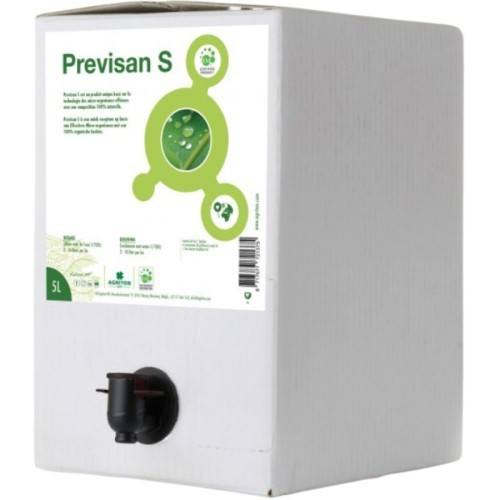
Previsan S is a preparation based on Effective Microorganisms (EM®) combined with a 100% organic binder, specially designed to naturally protect leaves against pathogens.
Thanks to this plant-based binder, the EM® stick to the waxy layer of the leaves for a long time, even on plants with oily or glossy foliage (cabbage, boxwood, laurel, photinia, rhododendron, beech, etc.).
Previsan S creates a protective biofilm that acts as a physical barrier while promoting beneficial colonization of leaf surfaces according to the principle of dominance.
The result: a more resilient plant, less vulnerable to outside stressors, with protection that lasts longer.
Benefits
- Forms a natural protective film on leaves;
- Better EM® adhesion on waxy surfaces;
- Longer-lasting microbiological effectiveness;
- Limits the development of pathogens;
- Helps prevent sooty mold caused by honeydew;
- An ecological, environmentally friendly solution.
Recommended use
March – April
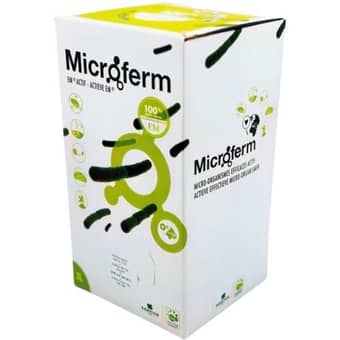
2 to 3 applications of Microferm alone, in damp weather, to optimize soil colonization.
Estimate: about 1.1 gallons of Microferm per application per acre (10 L/ha).
April – September
8 to 10 applications of a solution made up of:
- 33.8 fl oz (1 L) of Microferm;
- 33.8 fl oz (1 L) of Previsan S;
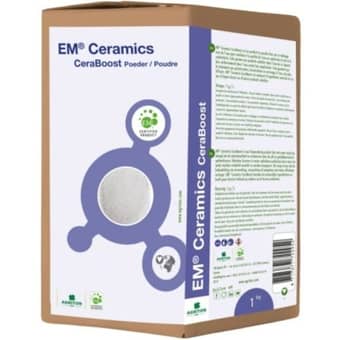
- 3.5 oz (100 g) of EM Cera Boost for
- 26.4 gallons (100 L) of water.
Apply 11 to 16 gallons of solution per acre (100–150 L/ha). Choose dry weather with dew (when the stomata are open).
October – November
3 applications of Microferm:
- When leaves start to fall;
- When 50% of the leaves have fallen;
- At the end of leaf fall.
Recommended rates
- 33.8 fl oz (1 L) per 26.4 gallons (100 L) of water.
- For targeted treatment: about 14 fl oz per acre (1 L/ha).
- Repeat weekly when disease pressure is high.
In times of stress (high humidity, risk of disease), apply more often rather than increasing the dose.
Important tips
- Ideally, use rainwater or well water (low in chlorine).
- Do not mix with chemical pesticides, to preserve microbiological effectiveness.
- Apply at the first sign of honeydew to prevent sooty mold.
How it works
Previsan S promotes long-lasting colonization of leaves by beneficial microorganisms.
The biofilm it forms acts as a physical and biological barrier against pathogens.
When honeydew is present (from aphids, etc.), the microbiological action helps reduce what feeds the fungi responsible for sooty mold.



































 France
 Belgium
 Switzerland
 Germany
 United Kingdom
 Italy
 Spain
 Holland
 Portugal
 Ireland
 Sweden
 Finland
 Denmark
 Greece
 Poland
 Rumania
 Czech Republic
