

































 Life on the farmBehind the scenes
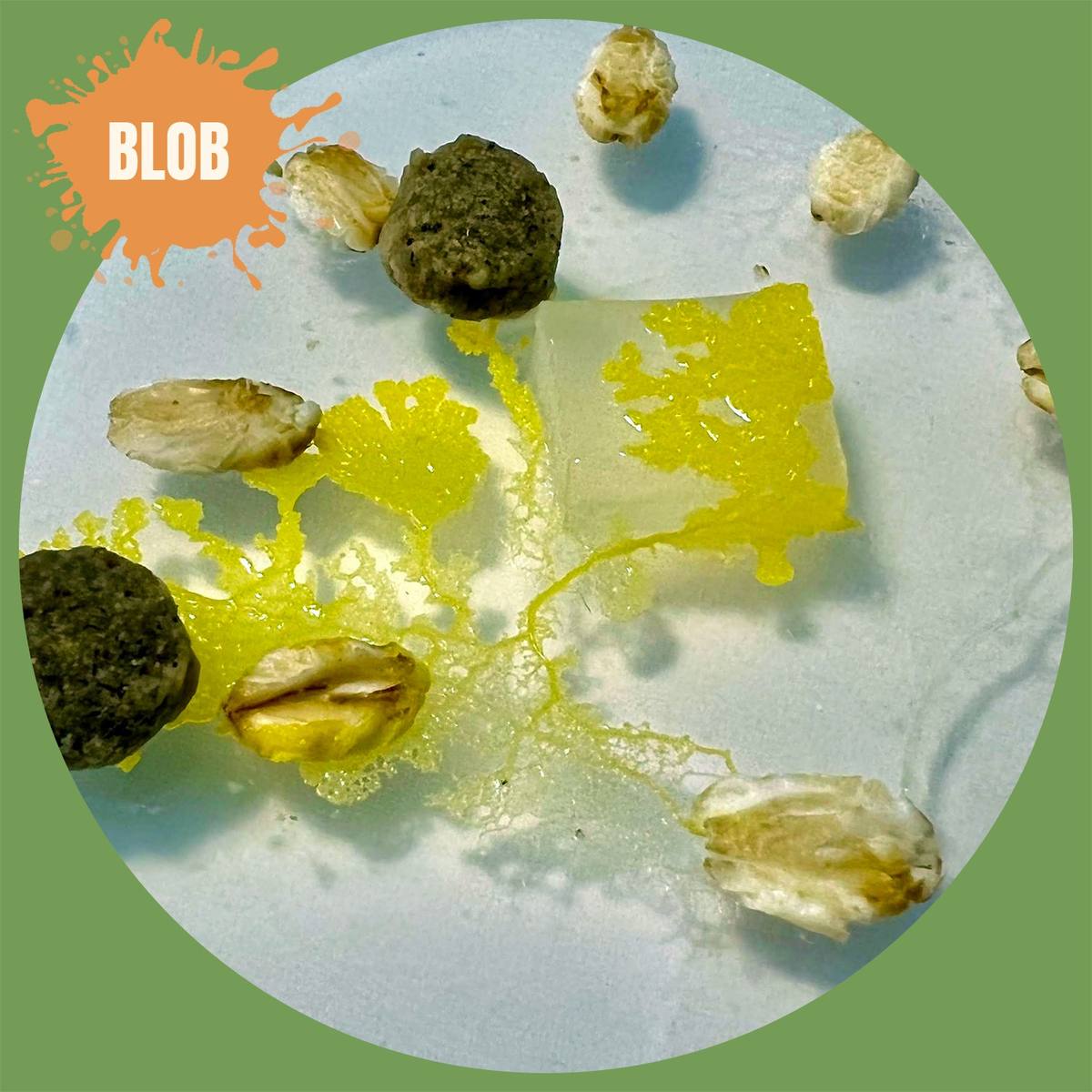
We don't just raise worms: the farm adopts a blob
Neither animal, plant nor fungus: the blob is one of the most astonishing living things on the planet. At the farm, we're trying our hand at raising one… and some people even find them in their wormery!

- The blob is neither an animal, a plant nor a fungus.
- It is a slime mould (myxomycete), made up of a single giant cell.
- You may sometimes come across one in a wormery or compost heap.
At Moutta Farm, we don't just raise Willys! We're trying a slightly crazy experiment: raising a blob. And as you'll see, this living thing is a real scientific oddity.
What is the blob?
The blob is neither an animal, a plant nor a fungus. It's what is known as a myxomycete, or slime mould, with characteristics all of its own. Its scientific name: Physarum polycephalum.
Its most astonishing feature: the blob is made up of just one single cell, but a very large one. This cell contains millions of nuclei, each holding a copy of its DNA.
What does a blob eat?
In our setup, the blob feeds on oat flakes. It spreads out, explores its surroundings and forms striking yellow networks. A fascinating sight to watch day after day.
A blob in the wormery?
Some lucky people even find them in their wormery or compost! Like many other small living things, slime moulds love moist organic matter. If you spot one, don't worry: it's part of the rich biodiversity of compost.
To discover all the inhabitants of your wormery, read our page life in a wormery: helpful little creatures.
Going further
New posts, tips and behind the scenes: Willy and Emy write to you.



 France
 Belgium
 Switzerland
 Germany
 Austria
 United Kingdom
 Italy
 Spain
 Holland
 Portugal
 Ireland
 Sweden
 Finland
 Denmark
 Greece
 Poland
 Rumania
 Czech Republic
